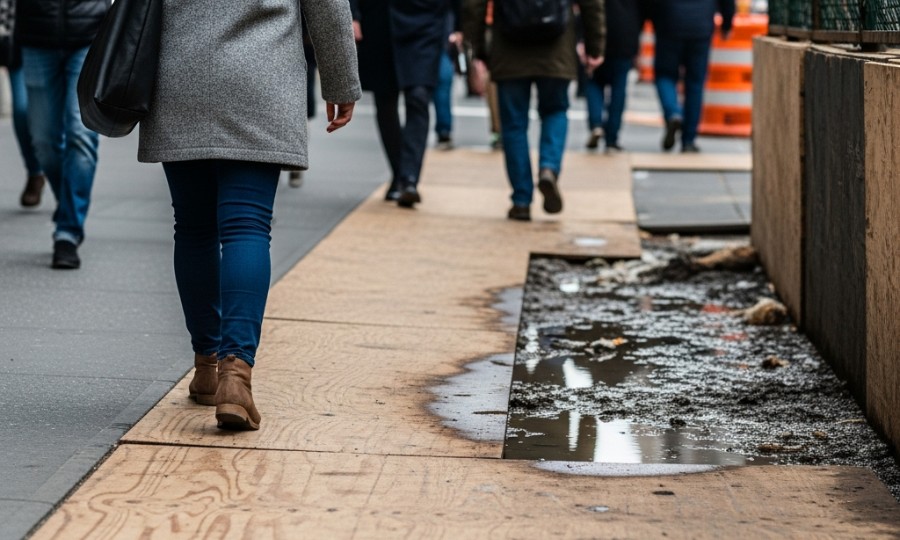
Navigating the bustling sidewalks of New York City is an art form, isn’t it? You’re dodging street performers, weaving through tourists, and generally trying to get where you need to go in one piece. But amidst the vibrant chaos, there’s an often-overlooked hazard that’s becoming increasingly common: construction zones. With our skyline constantly evolving, building sites are practically on every block, and unfortunately, they’re not always as safe for pedestrians as they should be. We’re seeing a concerning rise in pedestrian slip and falls right next to these active development areas, and it’s a problem we really need to talk about.
The Unseen Dangers Lurking on NYC Sidewalks
It’s no secret that NYC is a city in perpetual motion, always building, always expanding. While this growth is exciting, it also means that construction sites are an inescapable part of our urban landscape. But have you ever really considered the immediate perimeter of these sites from a pedestrian’s perspective? It’s often a gauntlet of potential dangers.
Think about it: temporary walkways can be uneven, planks might be loose, and debris can easily spill over from the site itself. Then there’s the mud and water that often accumulates, especially after rain, turning a simple stroll into a treacherous journey. Poor lighting at night or through covered scaffolding areas can obscure these hazards entirely. It’s not just about the workers inside the barriers; it’s about every single person who walks past them every day. These aren’t just minor inconveniences; they’re genuine safety threats that can lead to serious injuries, including debilitating slip and falls.
Common Causes of Pedestrian Slip and Falls Near Construction Sites
So, what exactly are we talking about when we say ‘hazards’? It’s a pretty diverse list, actually, and many of them are entirely preventable. Here’s the thing: construction companies have a clear responsibility to maintain safe conditions around their sites, and when they don’t, people get hurt.
- Slippery Surfaces: Mud, water, oil, or even ice (especially during winter) can create incredibly slick conditions. This often comes from runoff, leaks, or materials tracked out from the site.
- Uneven or Obstructed Walkways: Temporary pedestrian paths, often made of plywood or metal plates, can become misaligned, buckle, or simply be laid unevenly. Tools, materials, or discarded waste left on sidewalks force pedestrians into unsafe detours or over obstacles.
- Poor Lighting: Many construction sites require covered walkways or scaffolding that drastically reduce natural light. If artificial lighting isn’t properly installed or maintained, these areas become dark and dangerous, hiding trip hazards.
- Inadequate Signage or Barriers: Sometimes, warning signs are missing, illegible, or placed incorrectly. Barriers might be flimsy, incomplete, or knocked down, allowing pedestrians into hazardous areas they shouldn’t be in. You might wonder, ‘Couldn’t I just see that?’ But in a busy, distracting environment like NYC, clear warnings are absolutely crucial.
- Loose Gravel or Debris: Construction involves a lot of small particles and discarded items. If these aren’t regularly swept up, they can act like ball bearings underfoot, leading to a nasty fall.
Who’s Responsible? Understanding Liability in NYC
When you’ve suffered a slip and fall injury near a construction site, one of the first questions you’ll likely have is, ‘Who’s to blame?’ In New York City, the answer isn’t always straightforward, but generally speaking, there are several parties who could be held responsible due to their ‘duty of care.’ This includes the property owner, the general contractor overseeing the project, and even subcontractors working on specific aspects of the construction.
NYC building codes and safety regulations are pretty clear: those in charge of construction sites must ensure the safety of both workers and the public. This means maintaining clear, safe pedestrian pathways, adequately lighting these areas, securing all hazards, and providing proper warning signs. If they fail to meet these standards and you get hurt as a result, they could be found negligent. It’s not just about what they did do, but also what they failed to do. Proving fault can be complex, often requiring a thorough investigation into site safety protocols, maintenance logs, and even witness testimonies. It really highlights why gathering evidence quickly is so important.
What to Do If You’ve Been Injured: Your Immediate Steps
We know this feels overwhelming, especially if you’re in pain or feeling shaken up after an accident. But taking the right steps immediately after a slip and fall near a construction zone can make a huge difference in protecting your rights and ensuring you get the care and compensation you deserve. You might be thinking this won’t work because you’re too flustered, but even a few key actions can be incredibly helpful.
- Seek Medical Attention Immediately: Even if you think your injury is minor, get it checked out by a doctor. Some injuries, like concussions or soft tissue damage, might not show severe symptoms right away. Medical records are also crucial documentation.
- Document Everything: If you’re able, take photos and videos of the scene. Capture the specific hazard that caused your fall, the surrounding area, any warning signs (or lack thereof), and the overall condition of the construction zone. Get contact information from any witnesses.
- Report the Incident: Notify the construction site manager or foreman, or the property owner, about your fall. Ask for an incident report and get a copy of it. If they refuse, make a note of that.
- Preserve Evidence: Don’t clean or throw away the shoes or clothing you were wearing. They might contain evidence of the conditions that caused your fall.
- Consult with a Legal Professional: This is a critical step. An attorney experienced in NYC construction accident cases can help you understand your rights, navigate the complexities of liability, and ensure you’re fairly compensated for medical bills, lost wages, and pain and suffering. Don’t you think it’s worth understanding all your options?
Proactive Safety Measures: Protecting Yourself and Others
While the primary responsibility for pedestrian safety rests firmly with construction companies and property owners, there are a few things you can do to be more vigilant. Always pay close attention to your surroundings, especially when walking near active construction sites. Avoid distractions like your phone, and always use designated pedestrian pathways, even if they seem a bit longer. However, I believe the real change comes from holding negligent parties accountable.
Construction companies should be doing more: ensuring proper barricades, maintaining well-lit and clear walkways, regularly inspecting the perimeter for hazards, and immediately addressing any issues. When they don’t, it’s not just an oversight; it’s a breach of their duty to public safety. In my experience, addressing these ‘catastrophes’ means not only helping those who’ve been injured but also pushing for better safety standards across the board in our city.
A slip and fall near an NYC construction site can be a jarring, painful, and financially draining experience. But you don’t have to face it alone. Understanding your rights and taking swift, decisive action can make all the difference. If you or a loved one has suffered an injury due to negligence near an NYC building site, don’t hesitate to seek legal guidance. It’s time to ensure that progress doesn’t come at the cost of pedestrian safety.
This article was drafted with AI assistance. Please verify all claims and information for accuracy. The content is for informational purposes only and does not constitute professional advice.
Free Case Consultation
Injured in an accident? Speak directly with an experienced NYC personal injury attorney at
Rosenberg, Minc, Falkoff & Wolff.
Your consultation is free, confidential, and risk-free.
No obligation – No upfront fees – You don’t pay unless we win
Follow RMFW Law for legal insights and case results: