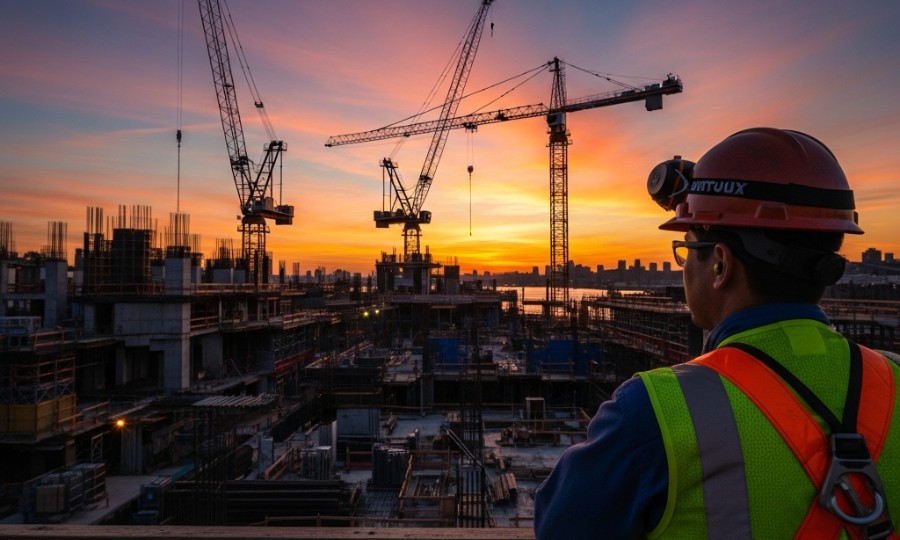
Brooklyn’s skyline is a testament to incredible growth and ambition, isn’t it? Everywhere you look, new developments are reaching skyward, transforming neighborhoods and injecting a vibrant energy into the borough. It’s exciting to witness, but here’s the thing: with this rapid construction boom, a critical question emerges – are safety measures truly keeping pace with the relentless speed of development?
You might be thinking, “Of course, safety is always a priority.” And in theory, it absolutely should be. Yet, recent data from the New York City Department of Buildings (DOB) and other industry reports suggest a concerning trend: as construction projects multiply, so too do the incidents and injuries on job sites. This isn’t just about statistics; it’s about the real people who show up every day to build our city, and their right to return home safely to their families. We’re seeing a paradox unfold: a booming industry, but with an escalating human cost.
The Unseen Cost of Brooklyn’s Building Boom
When you drive through neighborhoods like Downtown Brooklyn, Bushwick, or Williamsburg, you can’t help but notice the cranes dominating the horizon. It’s a clear sign of economic vitality, but beneath that impressive facade lies a serious concern. According to official reports, construction-related injuries and fatalities in NYC, while fluctuating, remain a persistent challenge, particularly as the sheer volume of work increases. Are these incidents just an unfortunate byproduct of progress, or do they signal deeper issues within our safety protocols and enforcement?
We’re talking about everything from falls from heights – which, heartbreakingly, remain a leading cause of fatalities – to being struck by objects, electrocutions, and injuries from heavy machinery. Each of these isn’t just a number; it’s a life altered, a family impacted. The pressure to complete projects quickly, often compounded by tight budgets, can sometimes, unfortunately, overshadow the crucial need for stringent safety practices. It’s a tough balance to strike, but one that demands constant attention.
Navigating the Regulatory Landscape: What’s Currently in Place?
It’s not as if there aren’t rules. Both federal agencies like the Occupational Safety and Health Administration (OSHA) and local bodies like the NYC DOB have comprehensive regulations designed to protect workers. OSHA standards, for example, clearly mandate requirements for fall protection, scaffolding safety, trenching, and personal protective equipment (PPE). Locally, the DOB enforces a labyrinth of rules, including requirements for site safety plans, permits, and regular inspections.
You see, developers and contractors are required to submit detailed safety plans for projects above a certain height or scope. These plans outline everything from emergency procedures to how hazardous materials will be handled. Also, NYC has been at the forefront of worker training initiatives, notably with Local Law 196, which mandates extensive safety training for most construction workers on sites requiring a Site Safety Plan. This law, implemented in phases, aims to ensure that workers have a foundational understanding of safety practices before they even step onto a site. It’s a significant step, designed to empower workers with knowledge and reduce preventable accidents.
Local Laws and Their Ongoing Impact
Beyond Local Law 196, various other local statutes are continually updated to address specific risks inherent in urban construction. For instance, laws governing crane operations, demolition practices, and even the protection of adjacent properties are critical. The intent behind these laws is always to enhance safety, but the reality of their implementation and enforcement can be complex. You might wonder, how effective are these regulations if accidents are still occurring? That’s where the challenge lies – in bridging the gap between comprehensive legislation and consistent, on-the-ground compliance.
The Challenges on the Ground: Why Accidents Persist
Despite robust regulations and dedicated inspectors, construction accidents persist in Brooklyn. Why? A confluence of factors often contributes. One significant issue is the intense pressure for speed and efficiency. In a competitive market, developers want projects completed on time and within budget, which can sometimes lead to shortcuts if not properly managed. (It’s a common human tendency, unfortunately, to prioritize speed over caution when deadlines loom.)
Another factor is the complexity of urban construction itself. Building in a dense environment like Brooklyn often means working on cramped sites, adjacent to busy streets, and often renovating or expanding existing structures with their own unique challenges. This isn’t like building on a wide-open field; every move requires meticulous planning and coordination. Plus, the industry faces labor shortages in some specialized trades, potentially leading to less experienced workers being deployed without adequate supervision or training, despite Local Law 196’s efforts. Communication breakdowns, language barriers among diverse workforces, and insufficient supervision are also commonly cited contributors to incidents. Could the very speed of development be creating blind spots for safety, making it harder to catch potential hazards before they escalate?
Consider a scenario: a smaller subcontractor, eager to secure a contract, might bid aggressively low. To meet that budget, they might skimp on equipment maintenance or worker training, or even push workers to perform tasks without proper fall protection in a rush to meet a deadline. This isn’t just hypothetical; it’s a realistic pressure point in the industry that regulators and developers continually grapple with.
Proactive Steps: Innovations and Best Practices for a Safer Tomorrow
The good news is that the construction industry isn’t standing still. Many forward-thinking companies and industry organizations are actively seeking solutions. Technology, for instance, is playing an increasingly vital role. Drones are being used for aerial inspections of hard-to-reach areas, identifying potential hazards without putting workers at risk. Wearable tech can monitor workers’ vital signs or detect if they’ve fallen, instantly alerting supervisors. Building Information Modeling (BIM) isn’t just for design; it’s also being used to plan safety logistics and identify potential conflicts before construction even begins.
Beyond tech, there’s a growing emphasis on fostering a genuine culture of safety, rather than just compliance. This means regular, engaging safety meetings, empowering workers to speak up without fear of reprisal, and supervisors actively demonstrating a commitment to safety from the top down. Major developers are investing more in comprehensive training programs that go beyond minimum requirements, recognizing that a safer site is ultimately a more efficient and productive one. They understand that preventing accidents isn’t just good ethics; it’s good business.
What Can We Do? Actionable Steps for Stakeholders
So, what’s next? Ensuring safety in Brooklyn’s construction boom is a shared responsibility, and frankly, we all have a role to play. Don’t we all want to see Brooklyn thrive safely?
- For Developers and Contractors: Prioritize safety budgets as an investment, not an expense. Implement comprehensive, continuous training programs. Foster a transparent culture where safety concerns are welcomed and addressed immediately. Consider adopting advanced safety technologies.
- For Workers: Know your rights. Don’t hesitate to report unsafe conditions to your supervisor, union representative, or directly to the DOB. Your vigilance can literally save lives, including your own.
- For Policymakers and Regulators (like the DOB): Continue to adapt regulations to emerging construction methods and technologies. Enhance enforcement mechanisms, perhaps through more frequent, unannounced inspections, and implement more severe penalties for repeat offenders. Consider public awareness campaigns to highlight worker safety.
Brooklyn’s growth is phenomenal, and it’s something we should all be proud of. But that pride shouldn’t come at the expense of worker safety. By working together – developers, workers, regulators, and the community – we can ensure that our beautiful new buildings are not only impressive structures but also monuments built on a foundation of care and safety. Let’s make sure that as Brooklyn rises, its workers rise safely with it.
Free Case Consultation
Injured in an accident? Contact Rosenberg, Minc, Falkoff & Wolff for a free and confidential case review with an experienced NYC personal injury attorney.