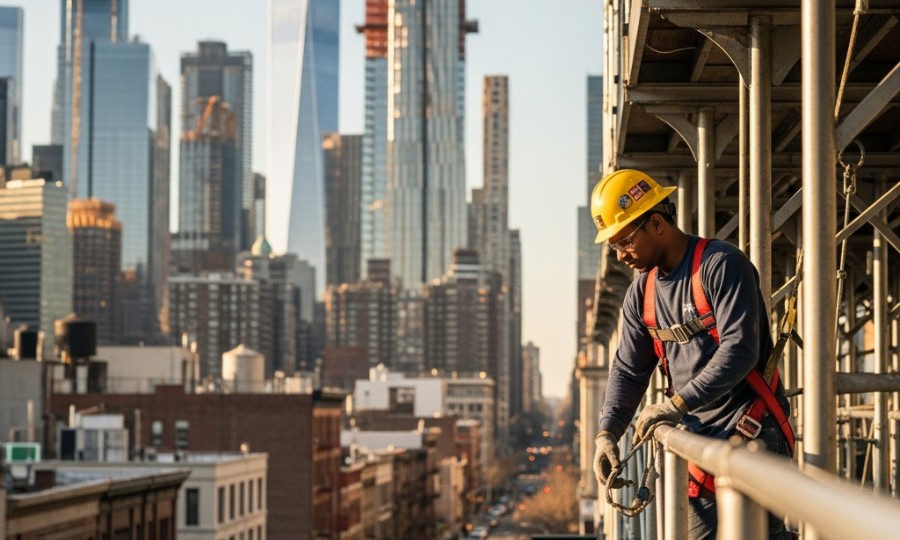
Imagine you’re working high above the bustling streets of Brooklyn, the city skyline spread out before you. You’re focused, diligent, doing your part to build the next big thing. But then, a ladder slips, a platform gives way, or something heavy tumbles from above. In an instant, your world can change. For construction workers in New York, these aren’t just hypotheticals; they’re very real dangers. That’s where New York’s unique and incredibly important ‘Scaffold Law’ comes into play.
It’s official name is New York Labor Law Section 240, and you might hear it referred to as the ‘Scaffold Law’ because, well, it largely deals with accidents involving scaffolds, ladders, and other elevation-related risks. But here’s the thing: it’s actually much broader than just scaffolds. This law is a critical piece of legislation specifically designed to protect workers from gravity-related construction accidents, which, as you can imagine, are often among the most severe. We’re talking about falls from heights, certainly, but also injuries caused by falling objects.
For those of us building Brooklyn, understanding this law isn’t just good to know; it’s absolutely essential. It can make all the difference in securing justice and compensation if you or a loved one is ever injured on the job. So, let’s unpack what the New York Scaffold Law really means for you.
Understanding New York’s ‘Scaffold Law’: More Than Just Scaffolds
When people hear “Scaffold Law,” they often picture a worker falling from a scaffold. And while that’s certainly a core component, NY Labor Law 240 actually covers a much wider range of gravity-related hazards. It places a non-delegable duty on owners and contractors to provide proper protection to workers. What does “non-delegable” mean? It means they can’t just pass the buck to someone else; the responsibility for safety ultimately rests with them.
This law is unique because it establishes what’s called ‘absolute liability’ in many cases. You might wonder, what does ‘absolute liability’ really mean for a construction worker? It means if an accident occurs due to a failure to provide adequate safety devices, and that failure directly leads to a gravity-related injury, the owner or contractor can be held liable, regardless of whether they supervised the work or if the worker contributed in some way. This is a significant departure from typical negligence laws, where a worker’s own actions might reduce their ability to recover damages. In essence, it aims to incentivize the highest level of safety on construction sites.
Absolute Liability: Why It Matters for Brooklyn Workers
Let’s consider a realistic scenario in Brooklyn. Imagine a new high-rise going up in Downtown Brooklyn. A worker is assigned to paint a section from a ladder. The ladder provided is old, wobbly, and doesn’t have proper safety feet. The worker falls, suffering a serious back injury. Under typical negligence law, the defense might argue the worker should have checked the ladder more carefully, or perhaps used a different one. However, under NY Labor Law 240, if the ladder wasn’t properly secured or failed to provide adequate protection, the owner or contractor could be held absolutely liable. The worker’s potential ‘fault’ generally won’t diminish their claim under this specific law (though it can affect other types of claims).
This is a powerful protection, isn’t it? It essentially recognizes the inherent power imbalance on a construction site and places the onus for safety squarely on those in control of the site and equipment. It’s a testament to New York’s commitment to protecting its workforce, especially in dangerous industries like construction.
Common Scaffold Law Accidents and What They Mean for You
While the name suggests scaffolds, the law broadly applies to any situation where a worker is exposed to elevation-related risks. What kind of incidents are we talking about?
- Falls from ladders: This is a very common one, often due to inadequate securing, defective equipment, or improper placement.
- Falls from scaffolds or platforms: Whether it’s a structural collapse, missing guardrails, or a slippery surface, these are classic Scaffold Law cases.
- Falls into openings: Uncovered floor openings, elevator shafts, or excavations can lead to devastating falls.
- Falling objects: This is the other side of the gravity coin. If a tool, material, or debris falls from a height and strikes a worker below, that’s also covered. Think of a wrench dropped from a higher floor at a Brooklyn Navy Yard renovation project, striking a worker on the ground.
- Hoisting accidents: Failures of hoisting apparatus that lead to materials falling can also trigger Scaffold Law protections.
The key here is that the injury must be ‘gravity-related’ and directly result from the failure to provide proper safety devices or protection. It’s not just any fall or any falling object; it’s about the lack of appropriate safeguards against those specific gravity-induced risks.
Navigating Your Rights After a Construction Accident in Brooklyn
If you’ve been involved in a gravity-related construction accident in Brooklyn, knowing your rights is the first step toward recovery. The immediate aftermath of an accident can feel incredibly overwhelming – pain, medical bills, lost wages, and the uncertainty of the future. But remember, you’re not alone, and you have legal avenues to explore.
The Scaffold Law isn’t just a legal theory; it’s a practical tool that helps injured workers secure compensation for medical expenses, lost wages, pain and suffering, and other damages. For example, consider a worker on a residential construction site in Bushwick. They’re on a platform, and a load of bricks, improperly secured, topples over and pins their leg, causing a severe fracture. This worker would likely have a strong claim under Labor Law 240, as the accident directly resulted from inadequate protection against a falling object.
Steps to Take After a Gravity-Related Incident
So, what should you do if this happens to you?
- Seek immediate medical attention: Your health is paramount. Even if you feel okay, get checked out. Some injuries aren’t immediately apparent.
- Report the accident: Notify your supervisor or employer about the incident as soon as possible. Make sure it’s documented.
- Document everything: Take photos of the scene, the equipment, your injuries, and anything else relevant (if you’re able). Note down the names of any witnesses.
- Don’t give recorded statements: It’s usually best to consult with an attorney before giving any recorded statements to insurance companies or others, as these can be used against you later.
- Consult with an experienced attorney: This is arguably the most crucial step. Navigating the complexities of NY Labor Law 240 requires specific legal expertise. An attorney specializing in construction accidents can assess your case, explain your rights, and guide you through the process, ensuring you don’t miss critical deadlines or compromise your claim. They’ll know how to gather evidence, deal with insurance companies, and fight for the compensation you deserve.
The truth is, construction work is inherently dangerous, but that doesn’t mean you should bear the burden of someone else’s negligence or failure to provide a safe working environment. The New York Scaffold Law is a powerful protector for workers like you, ensuring that those responsible for site safety are held accountable. Don’t hesitate to understand and exercise your rights; it could be the most important decision you make after an accident.
This article was drafted with AI assistance. Please verify all claims and information for accuracy. The content is for informational purposes only and does not constitute professional advice.
Free Case Consultation
Injured in an accident? Speak directly with an experienced NYC personal injury attorney at
Rosenberg, Minc, Falkoff & Wolff. Your consultation is free, confidential, and risk-free.
No obligation • No upfront fees • You don’t pay unless we win