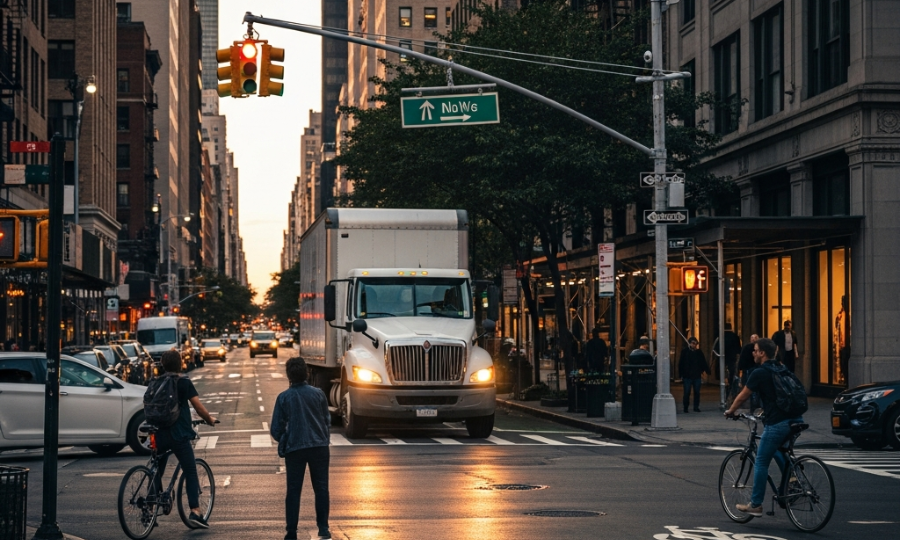
New York City streets buzz with constant activity. This vibrant energy, however, also presents unique challenges for road safety. Large commercial trucks share busy thoroughfares with countless pedestrians and cyclists every day. Unfortunately, this coexistence sometimes leads to devastating accidents. These incidents often cause severe injuries for our most vulnerable road users. Understanding the evolving landscape of safety measures and legal protections is crucial. As a trusted NYC personal injury lawyer, we know the profound impact these collisions have. This guide outlines seven essential safety measures and considerations. These measures protect pedestrians and cyclists from truck accidents across our boroughs.
Key Takeaways
- NYC’s side guard mandate for city-contracted trucks has demonstrably reduced severe injuries and saved lives, with studies showing substantial decreases in fatalities in cities that implement them.
- Turn calming treatments, like tightened curb radii, physically slow trucks at intersections, significantly reducing right-turn collision risks for pedestrians and cyclists.
- New York City’s Vision Zero initiative, adopted in 2014, aims to eliminate all traffic fatalities and serious injuries through comprehensive strategies including speed cameras and lower speed limits.
- Data analysis shows that specific NYC intersections can have significantly higher accident rates, highlighting the importance of targeted interventions for vulnerable road users.
1. The Impact of Truck Side Guards
Truck side guards represent a significant advancement in urban safety. These barriers attach to the sides of large trucks. They prevent pedestrians and cyclists from being pulled underneath the vehicle during a side-impact collision or turn. NYC implemented a side guard mandate for city-contracted trucks. This initiative has demonstrably reduced the severity of injuries in such incidents. It has also saved lives on our crowded streets. For example, Boston implemented side guards based on evidence from other jurisdictions, but Boston-specific fatality reduction data is not documented. These simple devices offer a vital layer of protection. They specifically address a common and deadly type of truck accident in New York City. The city is expanding this requirement to more vehicles. This shows a commitment to protecting vulnerable road users. If a truck involved in an accident lacked mandated side guards, this fact could significantly influence fault determination. It may strengthen a victim’s personal injury claim. Proving a trucking company’s failure to equip a vehicle with required safety features establishes a clear case of negligence.
Why it stands out: Side guards are physical barriers. They actively prevent devastating ‘underride’ accidents. This directly reduces fatalities and severe injuries for pedestrians and cyclists. Their absence can become a key factor in proving a trucking company’s negligence after a collision, potentially increasing compensation for victims.
2. Enhancing Safety with Turn Calming Treatments
Intersections are common sites for truck related incidents. Truck drivers often face visibility challenges when turning, especially in bustling areas like Brooklyn or the Bronx. Turn calming treatments address this danger directly. These involve physical changes to street geometry. They force turning vehicles, particularly large trucks, to slow down considerably. Examples include tightened curb radii and raised islands. These modifications make turns wider and slower. Consequently, drivers gain more time to see pedestrians and cyclists. Vulnerable road users also have more time to react. This proactive approach significantly minimizes the risk of right-turn collisions. It improves overall safety at critical intersections throughout NYC. When an accident occurs in a turn-calmed area, investigators can assess if the driver adhered to the intended slower speed. This helps establish liability. Also, if a driver failed to account for these design features, their negligence becomes more apparent. This strengthens the case for an injured pedestrian or cyclist.
Why it stands out: Turn calming treatments physically alter road design. They compel trucks to make safer, slower turns. This directly reduces the likelihood of catastrophic collisions with pedestrians and cyclists. Such infrastructure helps to mitigate driver error and clarify fault in an accident.
3. Vision Zero and its Comprehensive Approach
New York City adopted Vision Zero in 2014. This ambitious program aims to eliminate all traffic fatalities and serious injuries. Vision Zero views traffic crashes not as unavoidable accidents but as preventable incidents. It emphasizes a multi-faceted approach to safety. This includes safer street design, targeted enforcement, and public education campaigns. For example, speed cameras are strategically placed. Lower speed limits are enforced on major thoroughfares. These measures collectively create a safer environment. They protect pedestrians and cyclists from reckless driving. Vision Zero underscores the city’s commitment. It works towards making every street safer for everyone. Understanding how Vision Zero initiatives shape local roads can be crucial in accident investigations. It helps determine if road design played a role in a crash. For instance, a known dangerous intersection identified by Vision Zero data might highlight the city’s or property owner’s negligence if hazards persist.
Why it stands out: Vision Zero represents a holistic strategy. It combines engineering, enforcement, and education. This creates systemic changes that reduce the risk of all traffic fatalities, including those involving trucks. It highlights the city’s responsibility in road safety and provides a framework for accountability.
4. The Importance of Enhanced Driver Training
The actions of truck drivers play a crucial role in road safety. Comprehensive training programs are essential. These programs go beyond basic licensing requirements. They focus on specific hazards of urban driving. This includes navigating narrow streets and interacting with vulnerable road users. Training often covers blind spot awareness. It also addresses defensive driving techniques. For instance, many commercial carriers now implement advanced safety courses. These courses specifically address pedestrian and cyclist interactions. Better-trained drivers are more attentive. They are also more prepared to avoid collisions. This reduces the risk of serious truck accidents in busy areas like Manhattan or Queens. If a driver lacks appropriate training for NYC conditions, that deficiency can be a factor in proving negligence. This is especially true after a serious injury. Also, trucking companies have a legal obligation to ensure their drivers are properly trained and licensed. Failure to do so can make the company directly liable for an accident.
Why it stands out: Specialized driver training directly addresses human factors. It equips truck operators with skills and awareness. This significantly reduces the likelihood of preventable collisions with pedestrians and cyclists. Lack of such training can indicate negligence from both the driver and the trucking company.
5. Clarifying Right of Way Laws
New York State law clearly defines right-of-way rules. These rules dictate who has the legal priority to proceed. Pedestrians have right of way in crosswalks subject to traffic signals and other statutory conditions. Cyclists often share similar rights and responsibilities as motorists. Understanding these laws is critical for everyone. Ignorance of right-of-way rules often contributes to accidents. Drivers must yield to pedestrians in marked crosswalks. They must also exercise caution when a pedestrian is near. Cyclists must follow traffic signals and signs. Likewise, they must be predictable. When a truck driver violates these laws, they can be held liable. This legal framework protects vulnerable road users. It establishes accountability after a truck collision in NYC. Proving a driver failed to yield can be a cornerstone of a personal injury claim. For example, if a truck made an illegal turn through a pedestrian crosswalk, the driver’s clear violation of right-of-way laws establishes direct liability.
Why it stands out: Clear right-of-way laws establish legal precedence. They provide a framework for assigning fault after an accident. This protects pedestrians and cyclists by ensuring accountability. Evidence of a driver’s violation of these laws strengthens a personal injury claim significantly.
6. Leveraging Data for Proactive Safety
Data plays a powerful role in modern safety initiatives. New York City agencies collect extensive information on traffic incidents. This includes details about truck accidents involving pedestrians and cyclists. Analyzing this data reveals patterns and high-risk locations. For example, officials can identify dangerous intersections. They can pinpoint times of day when accidents are more frequent. This data-driven approach allows for targeted interventions. It helps allocate resources effectively. Consequently, city planners can implement specific design changes. They can deploy additional enforcement. This proactive use of analytics continuously improves urban safety. It helps prevent future tragedies on NYC streets. Also, historical accident data can support claims. It demonstrates a known hazard at a specific location, indicating potential negligence by responsible parties like the city itself or a property owner. This evidence can be vital in complex litigation.
Why it stands out: Data analysis identifies specific hazards and trends. It enables precise, evidence-based interventions. This continuously enhances safety measures for all road users. Data can also provide crucial context and evidence for accident investigations, highlighting systemic failures.
7. Seeking Justice After a Truck Accident
Even with robust safety measures, accidents unfortunately still occur. If you or a loved one sustains injuries in a truck accident, legal recourse is available. New York allows recovery of medical expenses, lost wages, and pain and suffering in tort cases, but with limitations in no-fault auto and workers’ compensation contexts. Identifying fault in a truck accident can be complex. Multiple parties might bear responsibility. These include the truck driver, the trucking company, or even the vehicle manufacturer. An experienced NYC truck accident lawyer can investigate the incident thoroughly. They can gather evidence and negotiate with insurance companies. They also represent your interests in court. Protecting your rights and securing fair compensation remains paramount. Do not delay in seeking legal advice after an injury. This ensures all potential avenues for compensation are explored. Our firm aggressively pursues justice for victims, ensuring they receive the full compensation they deserve.
Why it stands out: Legal recourse provides a pathway to justice. It ensures accountability for negligent parties. This offers critical financial and emotional support to victims of truck accidents. A skilled attorney is vital for navigating complex claims and maximizing compensation.
Taking Confident Steps Forward
The streets of New York City require constant vigilance from everyone. Progress in road safety is ongoing. Measures like truck side guards and turn calming treatments demonstrate a clear commitment to protecting vulnerable road users. However, accidents remain a harsh reality. If a truck accident has impacted your life, understanding your rights is essential. Navigating the legal complexities requires skilled guidance. A knowledgeable personal injury attorney can provide that clarity and support. We help you understand your options and pursue the justice you deserve. Do not hesitate to seek professional legal counsel. This ensures your legal claim is handled with the care and expertise it requires. Your focus should be on recovery. Let us handle the legal battle, safeguarding your future.
Related Reading
Frequently Asked Questions
What compensation can I seek if I am hit by a truck as a pedestrian or cyclist in NYC?
Injured pedestrians and cyclists can seek compensation for medical expenses, lost wages, and pain and suffering, and other damages. New York allows recovery of medical expenses, lost wages, and pain and suffering in tort cases, but with limitations in no-fault auto and workers’ compensation contexts. An experienced NYC truck accident lawyer can help you maximize your recovery.
How do truck side guards specifically protect vulnerable road users in New York City?
Truck side guards are physical barriers installed along the sides of large trucks. They prevent pedestrians and cyclists from being dragged underneath the vehicle during a side-impact or turning collision. This significantly reduces the severity of injuries, especially catastrophic underride fatalities, making NYC streets safer for vulnerable individuals.
Can the city be held responsible for a truck accident if a dangerous intersection design contributed to it?
Yes, in some cases, the City of New York or other municipal entities might bear partial responsibility if poor road design or known hazardous conditions contributed to a truck accident. Historical accident data and expert analysis can help establish this negligence, especially when Vision Zero data has identified persistent dangers at a specific location.
What role does driver training play in preventing NYC truck accidents with pedestrians and cyclists?
Enhanced driver training programs are crucial for preventing truck accidents. They equip drivers with specialized skills for navigating urban environments, improving blind spot awareness, and promoting defensive driving. When a trucking company fails to provide adequate training, it can be held liable for a driver’s negligence in an accident involving vulnerable road users.
This article was drafted with AI assistance. Please verify all claims and information for accuracy. The content is for informational purposes only and does not constitute professional advice.
Free Case Consultation
Injured in an accident? Speak directly with an experienced NYC personal injury attorney at
Rosenberg, Minc, Falkoff & Wolff.
Your consultation is free, confidential, and risk-free.
No obligation – No upfront fees – You don’t pay unless we win
Follow RMFW Law for legal insights and case results: