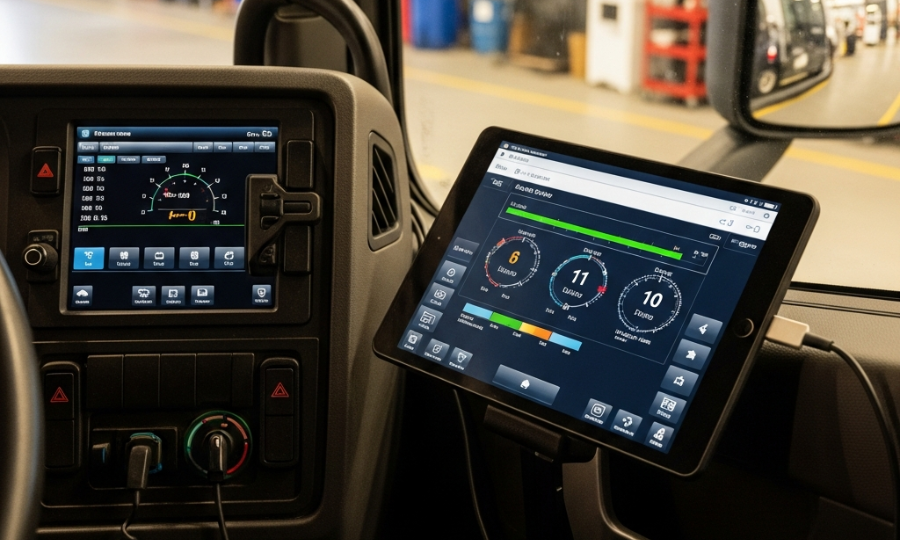
Understanding ELD Telematics and Engine Data in NYC Trucking Accidents
Commercial trucking collisions on New York City expressways like the Cross Bronx, the Brooklyn Queens Expressway, or the Long Island Expressway often cause catastrophic damages. When a fully loaded semi truck weighing up to eighty thousand pounds collides with a passenger automobile, the physical consequences are severe. Uncovering who was at fault requires looking beyond initial police reports or conflicting witness statements. Modern commercial motor vehicles are complex digital networks on wheels. They constantly transmit data regarding vehicle speed, braking response, and driver operation.
Key Takeaways
- ELD systems automatically record driving status when vehicle speed exceeds a configurable threshold that cannot be set higher than 5 mph to prevent manual log tampering under federal safety rules.
- Federal regulations require motor carriers to retain ELD Records of Duty Status and supporting documents for a minimum of 6 months.
- Engine Control Modules capture critical pre-impact telemetry such as vehicle speed, hard braking, and throttle position up to 5 seconds before a crash.
- Formal spoliation letters must be served quickly to preserve raw telematics data before routine system overwrites occur.
After a collision, unlocking this digital information becomes essential for an injured victim. Electronic Logging Devices, commonly known as ELDs, and Engine Control Modules, often called ECMs or heavy vehicle event data recorders, record crucial operational metrics. These digital records provide an accurate timeline of events immediately before, during, and after an accident. As a top NYC personal injury lawyer, our firm secures and analyzes these digital files to establish liability and hold reckless trucking companies accountable.
This comprehensive legal guide explains how ELD telemetry and engine data work, how Federal Motor Carrier Safety Administration standards apply, and how an experienced truck accident lawyer in Queens, Brooklyn, or Manhattan leverages this evidence to build a strong personal injury claim.
What Is an ELD and How Does Telematics Data Work?
An Electronic Logging Device is digital hardware installed inside a commercial truck cab that connects directly to the vehicle engine diagnostic port. Federal regulations under 49 CFR Part 395 require commercial motor carriers to install ELD systems, with technical standards specified in Subpart B to automatically track driver duty status and enforce federal Hours of Service rules. The primary intent of these regulations is to combat commercial driver fatigue, which remains a leading factor in serious highway crashes.
Under Appendix A to Subpart B of Part 395, ELD units must establish a link to the vehicle Engine Control Module and automatically receive specified data when the engine is powered. These systems automatically record vital parameters including engine power status, total vehicle miles, running engine hours, and precise satellite GPS coordinates at regular operating intervals. This direct synchronization ensures that driving time is logged objectively rather than relying on manual paper entries.
To eliminate manual alteration and unauthorized falsification of driving hours, the regulatory framework establishes strict automation thresholds. Federal guidelines specify that an ELD automatically engages driving status when a commercial motor vehicle reaches a speed threshold that cannot exceed 5 miles per hour. This automatic engagement creates an unalterable digital log entry that prevents commercial drivers from manually configuring the software to hide vehicle motion or obscure prolonged driving sessions.
The Critical Role of Engine Control Module Telemetry and Event Recorders
While an ELD monitors long term driver hours and geographic movement, the vehicle Engine Control Module acts as the central brain of the commercial truck. The ECM constantly monitors engine health, fuel injection, transmission parameters, and wheel rotation speeds. In modern heavy trucks, the ECM incorporates Event Data Recorder functionality that functions similarly to a commercial airliner black box recorder.
During normal driving conditions, the ECM continuously overwrites operational telemetry in temporary memory loops. However, when the system registers a critical operational trigger, such as a sudden deceleration, a hard braking event, or an airbag deployment, the module freezes the snapshot of pre-impact telemetry into permanent internal memory. ECM event data recorders capture critical pre-impact telemetry, including hard braking events, vehicle speed, engine RPM, throttle position, and cruise control status, typically sampled from 5 to 30 seconds prior to a collision.
This millisecond by millisecond digital record gives personal injury attorneys an exact reconstruction of driver actions leading up to impact. For instance, ECM telemetry can prove whether a truck driver applied the brakes prior to hitting stopped traffic on the LIE or whether they approached a highway hazard at full highway speed without slowing down. Comparing ECM speed logs against local post limits across NYC thoroughfares establishes clear proof of negligent operation.
Uncovering Hours of Service Violations and Driver Fatigue
Driver fatigue drastically reduces reaction speed, situational awareness, and cognitive processing. To protect the motoring public, Federal Motor Carrier Safety Administration HOS limits restrict property carrying commercial truck drivers to a maximum of 11 hours of driving following 10 consecutive hours off duty, operating within a strict 14 hour duty window. Once a driver reaches the 11 hour driving cap or passes the 14 hour shift threshold, they must cease driving immediately.
Despite these federal rules, tight delivery schedules and financial pressures sometimes cause motor carriers and independent drivers to push past legal limits. ELD telemetry makes concealing these HOS non-compliance violations far more difficult than in the era of paper logbooks. An attorney analyzing raw ELD records can match timestamped GPS data against toll booth records from the RFK Bridge or Verrazzano-Narrows Bridge to reveal driver fatigue.
Also, ELD telematics track unassigned driving time. If a driver attempts to move a rig under an unauthenticated driver profile to bypass the 11 hour limit, the ELD flags the unassigned miles. Matching those unassigned movements with cab video feeds or fuel receipts reveals clear attempts to evade federal safety laws.
Navigating Statutory Exemptions to the ELD Mandate
While the ELD mandate covers the vast majority of commercial motor vehicles operating across New York State, federal regulations provide specific statutory exceptions. Key statutory exceptions include short-haul operators using timecards (under 49 CFR 395.1(e)), drivers using paper logbooks for no more than 8 days in a 30-day period, pre-2000 model year engines, and driveaway-towaway operations (under 49 CFR 395.8(a)).
Short-haul drivers who operate within a specific air mile radius and return to their work reporting location daily are permitted to use standard employee timecards instead of electronic logging devices. Similarly, older trucks built with pre-2000 model year engines lack the standardized electronic diagnostic ports required for integral ECM synchronization, making them exempt from ELD installation.
When a collision involves an exempt commercial truck, recovering critical crash evidence requires a different strategy. If you have been injured in a Brooklyn construction accident or a Queens delivery truck collision where the vehicle is exempt from ELD mandates, our legal team collects paper logbooks, fuel receipts, roadside inspection reports, and standalone GPS telematics hardware to verify driver hours and velocity.
Detecting Device Malfunctions, System Tampering, and Power Loss
In serious truck crash litigation, defense lawyers and insurance carriers sometimes claim that missing log data resulted from technical software glitches or hardware malfunctions. Federal rules establish clear technical definitions for device failures to prevent companies from using electronic glitches as an excuse to hide driver negligence.
According to Federal Motor Carrier Safety Administration guidance, an ELD power compliance malfunction is triggered when the logging unit loses power for an aggregate in-motion driving period of 30 minutes or more across a 24-hour cycle. When an ELD registers a malfunction, federal rules require that the commercial driver notify the motor carrier within 24 hours and maintain manual paper logs until the hardware is restored.
If a commercial carrier fails to repair a malfunctioning unit within 8 days or cannot show proper written malfunction notices, this failure can serve as strong evidence of negligent maintenance or regulatory non-compliance. Also, forensic software analysts can evaluate diagnostic fault codes to determine whether power loss was caused by a genuine electrical fault or an intentional effort to pull the power cable to hide illegal driving time.
Preserving Digital Evidence After a Collision in New York City
Digital engine data and ELD telematics records do not remain available indefinitely. Commercial motor carriers must retain ELD Records of Duty Status and underlying supporting documents for a minimum of 6 months. Once this mandatory six month retention period expires, trucking companies may legally delete, overwrite, or purge electronic log data during routine server maintenance.
Additionally, because ECM modules continuously record in short memory loops, moving the crashed truck, turning the ignition key, or towing the vehicle can accidentally overwrite pre-impact telemetry. This makes immediate legal action essential after a crash anywhere in the five boroughs.
Our Queens car accident attorneys explain how insurance laws apply to multi-vehicle crashes and take immediate legal steps to safeguard electronic evidence. As soon as we represent an accident victim, we issue a formal Spoliation Letter to the motor carrier, their insurance carrier, and their legal counsel. This legal notice commands the immediate preservation of all raw ELD data, ECM flash memory, telematics satellite transmissions, cab camera video, and maintenance logs. If a motor carrier destroys or overwrites this data after receiving a spoliation letter, New York courts can impose severe legal sanctions, including striking the defense answer or instructing the jury to presume the destroyed evidence proved the carrier was at fault.
Frequently Asked Questions
How long do trucking companies keep ELD logs after a crash?
Commercial motor carriers must retain ELD Records of Duty Status and supporting documents for at least 6 months. However, when an attorney serves a spoliation of evidence letter immediately after a crash, the carrier has a legal obligation to preserve all electronic logs indefinitely for litigation.
Can an ELD log prove a truck driver was speeding?
Yes. ELDs capture GPS location and vehicle miles at regular intervals, allowing experts to calculate average velocity. Also, the underlying ECM records exact vehicle speed sampled every second prior to an impact, giving precise proof of speeding or reckless driving.
What happens if a trucking company claims the ELD was broken during the accident?
Federal guidance dictates that an ELD power compliance malfunction occurs when power is lost for an aggregate in-motion driving time of 30 minutes or more over 24 hours. Drivers must give written notice within 24 hours and switch to paper logs. If the carrier cannot produce these required notices or paper logs, their defense can be challenged in court.
Are all commercial trucks in NYC required to have ELDs installed?
No. Short-haul operators using daily timecards are exempt under 49 CFR 395.1(e), while drivers keeping paper logbooks for 8 days or fewer in a 30-day period and commercial vehicles with pre-2000 model year engines are exempt under other provisions of 49 CFR 395.8. In these cases, attorneys use paper logs, dispatch records, and secondary GPS devices to prove liability.
How quickly should I hire a lawyer after a truck accident in New York?
You should contact an experienced personal injury attorney as soon as possible. Because ECM event data can be overwritten by turning on the engine or towing the vehicle, sending a formal preservation letter right away is vital to protecting your rights.
Getting Started with Your NYC Trucking Accident Claim
Navigating the legal complexities of commercial trucking accidents requires deep familiarity with federal safety rules, telematics technology, and New York personal injury law. Unlocking the digital black box inside a commercial tractor trailer provides the objective facts needed to hold negligent drivers and fleet operators responsible for your injuries.
If you or a loved one has suffered severe injuries in a collision involving a commercial vehicle, do not wait for critical electronic evidence to disappear. As a top NYC personal injury lawyer, our firm offers compassionate guidance and aggressive legal representation to accident victims across Manhattan, Brooklyn, Queens, the Bronx, and Staten Island. Contact our office today for a free, confidential consultation to review your case and protect your legal rights.
Sources
- Federal Motor Carrier Safety Administration, 49 CFR § 395.26 – ELD Data Automatically Recorded
This article was drafted with AI assistance. Please verify all claims and information for accuracy. The content is for informational purposes only and does not constitute professional advice.
Free Case Consultation
Injured in an accident? Speak directly with an experienced NYC personal injury attorney at
Rosenberg, Minc, Falkoff & Wolff.
Your consultation is free, confidential, and risk-free.
No obligation – No upfront fees – You don’t pay unless we win
Follow RMFW Law for legal insights and case results: