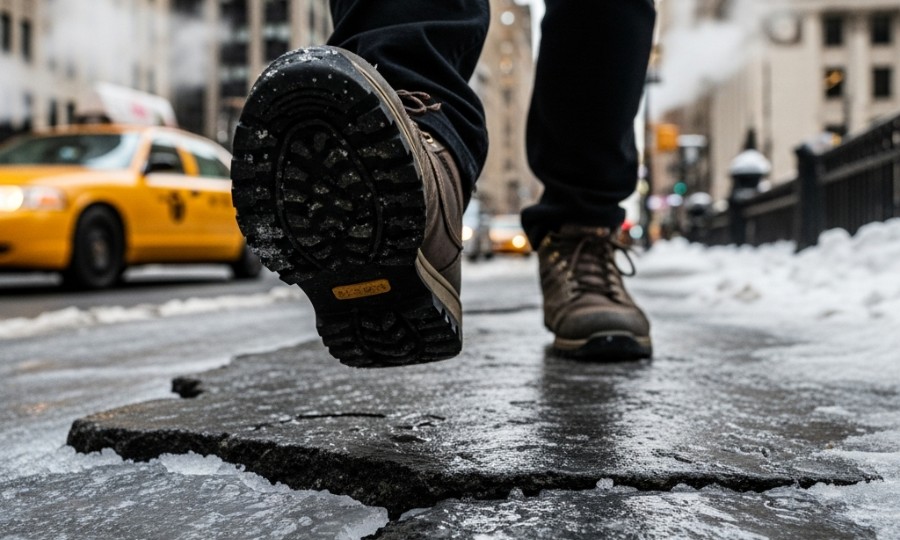
There’s a rhythm to walking in New York City, isn’t there? The hurried pace, the dodging of crowds, the vibrant street life – it’s all part of the daily grind. But what happens when that rhythm is suddenly, violently, broken by an unexpected slip and fall on a city sidewalk? One moment you’re navigating the bustling streets, the next you’re on the ground, potentially injured, and likely wondering: who’s responsible for this?
Here’s the thing: understanding liability for a slip and fall on an NYC sidewalk isn’t as straightforward as you might think. Unlike many other places, New York City has some truly unique rules that can make pursuing a claim feel like navigating a legal labyrinth. We’re talking about specific laws, exceptions, and precedents that dictate who (if anyone) is accountable for maintaining those thousands of miles of concrete. It can feel incredibly frustrating, especially when you’re dealing with pain and mounting medical bills, but you don’t have to figure it all out alone.
The Unique Landscape of NYC Sidewalk Liability
Let’s dive right into what makes NYC different. Generally speaking, in most places, property owners are responsible for maintaining the sidewalks directly adjacent to their property. Sounds logical, right? Well, in New York City, the default rule (with some significant caveats) places primary responsibility for public sidewalk maintenance on the City itself, not necessarily the adjacent property owner. This stems from a legal concept often referred to as the “Pothole Law” (New York City Administrative Code Section 7-210), which shifted some liability back to property owners for certain types of properties, but not all.
So, you might be thinking, “Does that mean if I trip on a cracked sidewalk in front of a brownstone, I have to sue the City?” In many cases, yes, you’d be looking at a claim against the City of New York. And here’s where it gets even trickier: when suing the City, you usually need to prove they had “prior written notice” of the hazardous condition. This means someone had to have formally reported that specific crack, pothole, or defect to the City in writing, and the City failed to fix it within a reasonable timeframe. Without that written notice, your case against the City becomes significantly harder to win. It’s a huge hurdle, honestly, and one that often catches people off guard.
When Property Owners Are on the Hook: The Exceptions
While the City often holds the primary bag for general sidewalk defects, there are crucial situations where the adjacent property owner does bear responsibility. These exceptions are incredibly important for anyone considering a claim:
- “Special Use” Exception: This is a big one. If a portion of the sidewalk is used for a special purpose for the benefit of the property owner, they’re responsible for its maintenance. Think about a driveway cutout leading to a parking garage, a cellar door or grate, a utility cover, or a sidewalk cafe setup. These aren’t just general sidewalk areas; they serve the property directly. If a patron slips on a worn cellar grate outside a restaurant, for instance, the restaurant owner could very well be liable because that grate is a “special use” feature for their business.
- Creating a Hazard: If the property owner, or someone acting on their behalf, actually creates the dangerous condition, they’re liable. Imagine a construction crew working on a building leaves debris or an open trench on the sidewalk without proper warning – that’s a created hazard.
- Negligent Repair: Did the property owner attempt to fix a sidewalk issue but do so poorly, making it even more dangerous? If their repair job makes things worse, they can be held responsible for the resulting injury. It’s not enough to just try; they have to do it competently.
- Commercial Property Owners (NYC Administrative Code Section 7-210): This is the key piece of legislation for many sidewalk claims. For owners of commercial properties (like businesses, stores, and large residential buildings with more than three units), Section 7-210 shifts liability for injuries caused by defective sidewalks directly to them. This doesn’t apply to owner-occupied one-, two-, or three-family homes, which is an important distinction! So, if you fall on a broken sidewalk in front of a bustling retail store, you’re likely looking at a claim against the store’s property owner, not the City, assuming they meet the criteria for Section 7-210.
This is why simply knowing you fell on a sidewalk isn’t enough; you need to understand where you fell and what caused the fall in relation to these specific rules. It’s a lot to consider, isn’t it?
Snow and Ice: A Different Ballgame in the Big Apple
When winter hits NYC, the risks of slip and falls skyrocket. But who’s responsible for clearing snow and ice from sidewalks? Here, again, the rules are specific. Property owners (both residential and commercial) generally have a legal duty to clear snow and ice from their adjacent sidewalks within a “reasonable time” after a storm. What constitutes “reasonable” can vary, but generally, it’s a few hours after the precipitation stops, not necessarily during an ongoing blizzard.
However, simply not clearing snow isn’t always enough to establish liability. A property owner can be held liable if they either:
- Aggravated the Condition: This means they took action that made the sidewalk more hazardous than if they had done nothing. For example, imagine a building owner shovels snow into a pile near the curb that later melts and refreezes into a dangerous sheet of black ice across the path.
- Failed to Address a Long-Standing Hazard: If snow or ice has been present for an extended period, creating a dangerous, known condition that the owner failed to remedy, they could be liable. Consider a scenario where a large commercial building’s management office has received multiple complaints about a perpetually leaky gutter creating a slick, algae-covered patch on the sidewalk, but they’ve ignored it for weeks.
You might wonder, “Does shoveling a path that later refreezes make things worse?” The answer is often yes, if that refrozen ice becomes a new, unique hazard. The key is proving that the owner’s actions (or inaction) created or worsened the dangerous condition beyond what nature alone would have presented. It’s a nuanced area of law, requiring careful documentation of the weather, the property owner’s actions, and the condition of the sidewalk at the time of your fall.
What to Do Immediately After an NYC Slip and Fall
If you’ve experienced a slip and fall on an NYC sidewalk, your immediate actions can significantly impact any potential claim. We know this feels overwhelming in the moment, especially if you’re in pain, but these steps are crucial:
- Prioritize Your Health: Your safety and well-being come first. Seek medical attention immediately, even if you think your injuries are minor. Some injuries, like concussions or soft tissue damage, might not be apparent right away. A doctor’s visit creates an official record of your injuries.
- Document the Scene: If you’re able, take photos and videos of everything. Get clear shots of the specific defect that caused your fall (the crack, pothole, ice patch, uneven flagstone). Also, photograph the surrounding area, signage, the entire sidewalk stretch, and even the adjacent property. Pictures speak volumes, especially when proving the condition existed.
- Gather Witness Information: Did anyone see you fall? Ask for their names and contact information. Witness testimony can be incredibly powerful in corroborating your account.
- Report the Incident: If you fell in front of a business, report it to the manager or owner and ask for an incident report. If it’s a City sidewalk, documenting it with 311 or the Department of Transportation (DOT) can sometimes help establish notice, though typically prior written notice is needed for a strong claim against the City.
- Preserve Evidence: Don’t clean or throw away the shoes or clothing you were wearing. They might contain evidence of your fall (e.g., mud, scuff marks).
These steps are vital because memory fades, and conditions can change quickly. The more evidence you can gather at the time, the stronger your position will be later.
Building Your Case: The Role of Legal Guidance
As you can see, navigating NYC sidewalk slip and fall liability is complex. Between the “prior written notice” rule for the City, the “special use” exceptions, the nuances of commercial property owner liability, and the specific rules for snow and ice, it’s a lot for an injured individual to manage. You might be thinking this won’t work because proving notice seems impossible, but experienced legal professionals know how to investigate these situations thoroughly.
An attorney specializing in NYC premises liability can:
- Investigate Thoroughly: They can obtain DOT records for prior written notice, review building permits, research property ownership, and look for patterns of neglect.
- Gather Evidence: Beyond your initial photos, they can secure surveillance footage, interview witnesses, and consult with experts (e.g., meteorologists for snow/ice cases, engineers for structural defects).
- Understand the Law: They’re intimately familiar with NYC’s specific Administrative Code sections, case law, and the strategies needed to argue effectively against the City or private property owners.
- Negotiate and Litigate: They’ll handle all communication with insurance companies and, if necessary, take your case to court to fight for the compensation you deserve.
Ultimately, a slip and fall isn’t just an accident; it’s often a legal challenge that demands a deep understanding of local laws and a strategic approach. How do you even prove someone knew about a hazard? That’s where expert legal guidance becomes invaluable. Isn’t it worth knowing your options and having someone advocate fiercely for your rights?
If you’ve suffered an injury from a sidewalk slip and fall in New York City, don’t let the complexity of the law deter you. Understanding your rights and the unique liability rules here is the first step toward getting the justice and compensation you deserve. Reach out to a qualified attorney who understands the ins and outs of NYC premises liability to discuss your specific situation. They can help you determine who might be responsible and what your next steps should be.
This article was drafted with AI assistance. Please verify all claims and information for accuracy. The content is for informational purposes only and does not constitute professional advice.
Free Case Consultation
Injured in an accident? Speak directly with an experienced NYC personal injury attorney at
Rosenberg, Minc, Falkoff & Wolff.
Your consultation is free, confidential, and risk-free.
No obligation – No upfront fees – You don’t pay unless we win
Follow RMFW Law for legal insights and case results: