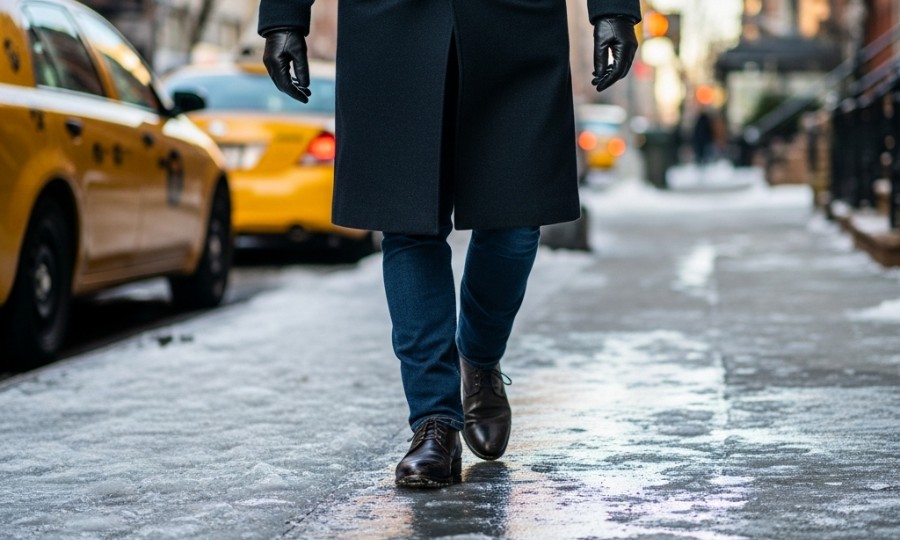
Winter in New York City? It’s often magical, isn’t it? Twinkling lights, festive windows, maybe even a gentle snowfall turning the city into a picturesque wonderland. But let’s be honest, that magic can quickly turn treacherous when those beautiful snowflakes melt and refreeze, leaving behind a minefield of icy sidewalks. You’re just trying to get to work, grab a coffee, or enjoy a walk, and suddenly, boom – you’re on the ground, hurting, and wondering what just happened. It’s a frustrating, often painful experience, and it leaves many New Yorkers asking: what now? What are your rights when a slip and fall on ice in NYC isn’t just an unfortunate accident, but a result of someone else’s negligence?
NYC’s Icy Sidewalks: Understanding the Property Owner’s Duty
Here’s the thing about New York City’s winter weather: it comes with very specific rules for property owners, designed to protect pedestrians like you. You might think, ‘Well, it just snowed, what can they do?’ The truth is, property owners, whether it’s a commercial building, an apartment complex, or even a private home, have a legal responsibility to maintain their sidewalks in a reasonably safe condition. This isn’t just a suggestion; it’s codified in the city’s administrative code. Specifically, the NYC Administrative Code § 16-123 mandates that property owners clear snow and ice from sidewalks adjoining their property. But it’s not an instant thing, is it? They’re usually given a ‘reasonable amount of time’ to do so. In most cases, this means within four hours after the snow stops falling, or after the accumulation of ice. However, if the snow stops between 9:00 PM and 7:00 AM, they have until 11:00 AM to get it cleared. What does ‘cleared’ mean? It generally means removing snow and ice or, if removal isn’t practical, treating it with salt, sand, or other abrasives to make it safe. Failure to do so can lead to liability if someone slips and gets hurt.
Who’s Responsible? Decoding Liability on the Big Apple’s Streets
So, who exactly is on the hook if you take a tumble on an icy patch? In New York City, the responsibility generally falls on the owner of the property adjacent to the sidewalk where the fall occurred. This includes commercial property owners, residential landlords, and even individual homeowners. It’s a unique aspect of NYC law compared to some other areas where municipalities might bear more responsibility for public sidewalks. For instance, if you slip on a patch of ice in front of a storefront on Fifth Avenue, it’s likely the store or building owner who’s responsible, not the city itself. This also extends to tenants in some cases, particularly if their lease agreement places the burden of sidewalk maintenance on them. It’s not always straightforward, which is why understanding these nuances is crucial for your potential claim. We’re talking about their duty to act reasonably, and if they didn’t, and you got hurt, that’s where negligence comes into play.
Immediately After the Fall: Steps to Protect Your Rights
We know this feels overwhelming, especially when you’re in pain and perhaps a little embarrassed. But what you do in the moments and hours following a slip and fall on an icy New York City sidewalk can make a significant difference in any potential claim you might have. First and foremost, check yourself for injuries. Your health is paramount. If you’re seriously hurt, call 911 immediately. Don’t try to tough it out or just ‘walk it off.’ Seeking medical attention isn’t just for your well-being; it creates an official record of your injuries, which is vital evidence.
Next, if you’re able, try to document the scene. I know, it sounds like a lot when you’re shaken up, but this is incredibly important. Use your phone to take photos and videos of the icy patch, the surrounding area, and any visible hazards. Capture the general conditions – the amount of snow, any melting and refreezing, and the absence of salt or sand. Don’t forget to take wide shots that show the property itself, making it clear where the incident occurred. Were there any witnesses? Politely ask for their contact information. Their testimony could be incredibly valuable, corroborating your account of events. You might be thinking this won’t work because you were too disoriented, and that’s perfectly understandable. Just do what you can, safely.
Gathering Crucial Evidence: Your Potential Case Depends On It
Beyond immediate documentation, there are a few more steps you’ll want to consider. Think about the details: what time did the snow stop falling? Was there a recent thaw and refreeze cycle? These specific details can help establish if the property owner had enough ‘reasonable time’ to clear the hazard. For example, if it hadn’t snowed in three days, and there was still a thick, untreated layer of ice, that’s a much stronger indicator of negligence than if it happened within an hour of a blizzard ending.
Also, preserve the clothes and shoes you were wearing. Don’t clean them, don’t throw them out. They can serve as evidence, especially if they show signs of the fall or the specific conditions (e.g., wet marks, mud, or even ice residue). Keep a detailed journal of your injuries, pain levels, and how the incident impacts your daily life. This isn’t just for your memory; it helps illustrate the full extent of your damages. For instance, you might note, ‘Day 3: Can’t lift my arm to comb my hair, constant throbbing in my shoulder, missed a client meeting due to pain medication drowsiness.’ These personal touches paint a clearer picture than just a doctor’s note.
Understanding Negligence: The Core of Your NYC Slip and Fall Claim
So, you’ve taken the initial steps. Now, let’s talk about the legal framework. For a successful slip and fall claim on an icy sidewalk in NYC, you generally need to prove negligence. What does that mean, exactly? It means demonstrating four key elements:
- Duty of Care: The property owner owed you a duty to maintain their sidewalk in a reasonably safe condition. As we discussed, NYC law generally establishes this duty.
- Breach of Duty: The property owner failed to uphold that duty. This could be by not clearing snow/ice within the mandated timeframe, failing to apply abrasives, or not addressing known dangerous conditions.
- Causation: The property owner’s breach of duty directly caused your injuries. In other words, if the ice hadn’t been there, you wouldn’t have fallen and been hurt.
- Damages: You suffered actual damages as a result of your fall – medical bills, lost wages, pain and suffering, and so on.
Proving negligence isn’t always simple, though. You’ll need to show that the property owner either created the hazardous condition, had actual knowledge of it and failed to fix it, or should have known about it through reasonable inspection (this is called ‘constructive notice’). For example, if there’s a recurring puddle that freezes every winter and the owner consistently ignores it, that could be constructive notice. It’s a detailed process, and it’s why having an experienced legal professional by your side is incredibly beneficial.
Common Defenses Property Owners Use (And How to Counter Them)
Property owners and their insurance companies aren’t just going to hand over a check. They’ll often present defenses to try and minimize or deny your claim. You might be thinking, ‘They’ll just say it was my fault,’ and you’re not wrong to consider that. One common defense is ‘comparative negligence,’ where they argue that you were partially responsible for your fall – maybe you weren’t watching where you were going, or you were wearing inappropriate footwear. New York is a ‘pure comparative negligence’ state, meaning even if you were 90% at fault, you could still recover 10% of your damages. However, they’ll still try to shift blame.
Another defense is that they didn’t have ‘notice’ of the hazardous condition, or that they acted reasonably given the circumstances. This is where your diligent documentation and witness statements become invaluable. If you have photos showing a thick, untreated ice patch hours after the four-hour window, it directly counters their claim of acting reasonably. They might also argue that your injuries aren’t as severe as you claim, or that they’re pre-existing. This is why consistent medical treatment and a detailed pain journal are so important – they provide an objective record of your suffering post-incident.
The Statute of Limitations: Don’t Miss Your Window to Act
This is a critical point that can’t be stressed enough: there are strict deadlines for filing a personal injury lawsuit in New York. This is called the ‘statute of limitations.’ Generally speaking, for most personal injury cases, you have three years from the date of the incident to file a lawsuit. However, if your slip and fall occurred on property owned or maintained by a municipality (like the City of New York), the timeline is significantly shorter and more complex. You might need to file a ‘Notice of Claim’ within a mere 90 days of the incident, followed by a lawsuit within one year and 90 days. Miss these deadlines, and you could lose your right to pursue compensation, regardless of how strong your case is. It’s a harsh reality, but it’s the law. This is precisely why early consultation with a legal professional is so important – they can help you navigate these time-sensitive requirements.
Navigating the aftermath of a slip and fall on an icy sidewalk in New York City can feel incredibly daunting, especially when you’re recovering from injuries. We understand the frustration and worry that can come with unexpected medical bills, lost time at work, and the general disruption to your life. You shouldn’t have to face this alone. If you’ve been injured due to a property owner’s negligence in clearing snow and ice, you may have a right to compensation. Don’t let the complexity of the law prevent you from seeking justice.
Your Next Steps:
- Prioritize Medical Care: Always put your health first.
- Document Everything: Photos, witnesses, medical records.
- Consult a Professional: Reach out to an experienced NYC personal injury attorney as soon as possible. They can evaluate your specific situation, explain your rights, and guide you through the legal process, ensuring you meet all critical deadlines. We’re here to help you understand your options and fight for the compensation you deserve.
Free Case Consultation
Injured in an accident? Contact Rosenberg, Minc, Falkoff & Wolff for a free and confidential case review with an experienced NYC personal injury attorney.