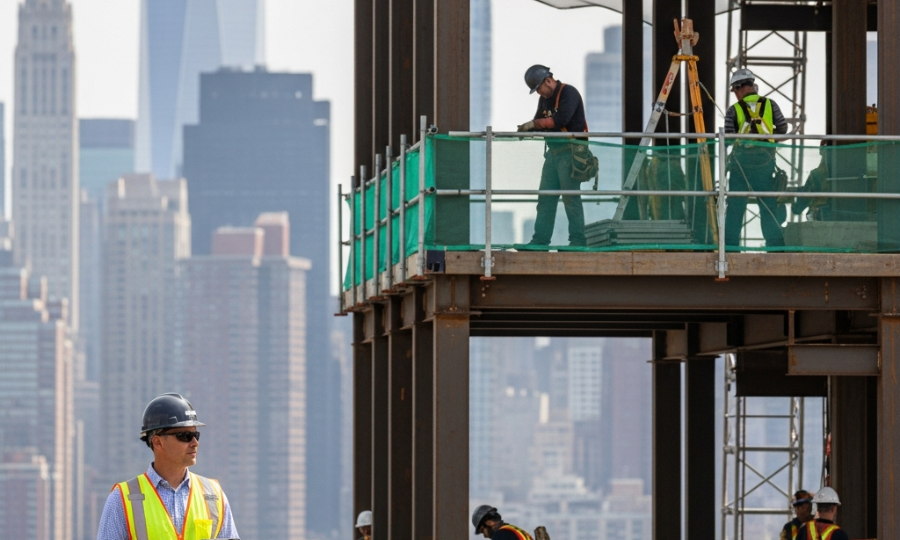
Construction sites across New York City are dynamic, bustling environments, yet they also present significant risks to workers and the public. In response to ongoing safety concerns, the city implemented a crucial new regulation designed to enhance direct supervision: the “one-job rule” for construction superintendents. This change, effective January 1, 2026, represents a significant step toward elevating accountability and reducing accident risks on construction sites throughout the five boroughs.
Key Takeaways
- Effective January 1, 2026, New York City’s Local Law 149 of 2021 mandates that primary construction superintendents can oversee only one active project at a time.
- This "one-job rule" aims to enhance direct supervision, improve accountability, and reduce accident risks on NYC construction sites.
- Construction workers in New York City were more than six times as likely to suffer a fatal workplace incident than the average worker citywide in 2024, according to NYCOSH data.
- Injured construction workers in NYC have strong legal protections, including New York Labor Law Section 240, known as the "Scaffold Law."
Understanding the New Superintendent Rule for NYC Construction Safety
New York City’s Department of Buildings (DOB) introduced the “one-job rule” through Local Law 149 of 2021, also known as Int. No. 2276-A. This landmark regulation fundamentally alters how primary construction superintendents manage projects. Starting January 1, 2026, each primary construction superintendent may oversee only one active job at a time, regardless of whether it is classified as a major or non-major building project.
Previously, superintendents could manage multiple projects simultaneously. For example, before this reform, a superintendent could oversee up to 10 projects since 2017. Local Law 149 phased in stricter limits over time. By June 1, 2022, the maximum was reduced to a limited number of active jobs per superintendent. Further, by January 1, 2024, this limit was further reduced. The DOB began enforcing this cap by rejecting permits if a superintendent already had multiple active designations. The final phase, effective January 1, 2026, brings the limit for construction superintendents under Local Law 149 down to a single primary project.
A transition period is in place for superintendents who were already overseeing multiple non-major jobs as of December 31, 2025. These individuals may continue with those specific existing jobs. However, they cannot take on any new primary job designations after January 1, 2026. As each of these preexisting jobs concludes, the superintendent cannot replace it with another primary designation. This allowance for multiple preexisting jobs will fully end on January 1, 2027. At that point, any superintendent still holding multiple non-major building jobs from December 31, 2025, must reduce their assignments to only one job.
This rule aims to improve accountability and ensure greater on-site focus. It also strengthens safety oversight across New York City’s construction sites.
The Critical Role of a Construction Superintendent
A construction superintendent plays a vital role in maintaining safety and compliance on a building site. Their responsibilities are extensive, encompassing various aspects of project oversight. For instance, superintendents must actively maintain a safe job site. They ensure all work adheres to approved construction documents.
Also, they are responsible for enforcing both OSHA and NYC Department of Buildings regulations at all times. This includes conducting daily safety inspections. They must also document site conditions in a required DOB logbook. When unsafe practices or hazards are identified, superintendents must immediately stop them. They also verify that all site workers possess the necessary OSHA and Site Safety Training (SST) certifications. Proper display of all required permits and safety postings on site falls under their purview as well.
It is important to distinguish between a Construction Superintendent and a Site Safety Manager (SSM) in New York City. A Construction Superintendent typically oversees overall project operations on smaller projects. Generally, these are buildings under seven stories. In contrast, a Site Safety Manager is mandated for major building projects. The NYC Building Code defines a major building as any structure that is seven or more stories, 75 feet or more in height, or has a building footprint of at least 100,000 square feet.
The new rule reinforces the importance of this direct supervision. It helps prevent oversight gaps that can lead to accidents and injuries. Through 2026, a superintendent may still designate a “competent person” to oversee a construction site. However, this is only allowed if the superintendent holds one primary job. This allowance for a competent person will also end on January 1, 2027. After this date, superintendents will generally need to be physically present on site whenever construction work is taking place, with limited exceptions.
Why Enhanced Supervision Matters: Addressing NYC Construction Accidents
The construction industry in New York City is undeniably hazardous. Despite ongoing efforts, accidents continue to occur, sometimes with tragic consequences. The New York City Department of Buildings (DOB) tracks construction injuries and fatalities at sites across the five boroughs. In 2025, the DOB recorded a number of construction-related incidents, resulting in hundreds of injuries and worker fatalities. This marked a decrease in incidents and injuries from 2024, when the DOB reported 638 incidents and 482 injuries. However, fatalities increased from 7 in 2024 to 10 in 2025. Falls consistently remain the leading cause of construction-related injuries and fatalities across all boroughs.
Looking at a broader scope, the New York Committee for Occupational Safety and Health (NYCOSH) publishes its “Deadly Skyline” report. This report utilizes data from the Bureau of Labor Statistics, the New York State Department of Labor, and the Occupational Safety and Health Administration (OSHA). NYCOSH reported 55 construction worker deaths across New York State in 2024. In New York City specifically, a number of construction workers died in 2024. This figure was down from 30 fatalities in 2023.
Between 2015 and 2024, New York City averaged approximately mid- to high-teens fatalities per year. The data reveals a stark reality: construction workers in New York City were more than six times as likely to suffer a fatal workplace incident compared to the average worker citywide in 2024. The construction fatality rate in the city was significantly higher than the overall worker fatality rate.
Many of these incidents are preventable. NYCOSH analyzed a number of OSHA-investigated construction fatality cases in New York State in 2024. They found that 77% of worksites where a worker died also had OSHA violations identified during the inspection. Fall protection has, in fact, topped OSHA’s list of violations for 15 consecutive years. This persistent issue underscores the critical need for stronger on-site supervision and adherence to safety protocols.
Challenges in Enforcement and the Need for Vigilance
Despite the clear dangers, enforcement efforts have faced challenges. OSHA inspections in New York State have seen changes over time. This reduction in aggressive enforcement can allow contractors to take greater chances with safety. Also, the average OSHA fine for a construction fatality has varied. Such lower fines may not adequately deter contractors from cutting corners to save money.
The NYC Department of Buildings itself has faced staffing issues. The DOB carried a staff vacancy rate of 12.6% as of April 2026. This rate is more than double the citywide agency average. Fewer investigators naturally limit the capacity for proactive inspections. These systemic factors highlight why robust internal oversight, like that mandated by the new “one-job rule,” is more crucial than ever.
For example, in a Brooklyn construction accident, a lack of consistent supervision could easily lead to overlooked hazards. A superintendent stretched across multiple sites might miss critical safety lapses. This could include inadequate fall protection or improperly secured equipment. These are common causes of serious injuries. The new rule aims to close these gaps. It demands a dedicated presence focused solely on the safety of one project. This singular focus can make a significant difference in preventing tragedies.
Navigating a Construction Accident Claim in New York City
When a construction accident occurs, the consequences can be devastating for injured workers and their families. Medical bills, lost wages, and long-term disability can create immense financial and emotional strain. If you or a loved one has been injured on a New York City construction site, understanding your legal rights is the first confident step toward recovery.
New York has specific laws designed to protect construction workers. For instance, New York Labor Law Section 240, often called the “Scaffold Law,” imposes absolute liability on property owners and general contractors for gravity-related injuries. This includes falls from heights and injuries caused by falling objects. This means an injured worker may not need to prove negligence in the traditional sense. This law provides strong legal footing for those hurt in such incidents.
Taking immediate action after an injury is important. First, seek prompt medical attention. Document everything related to your injury and the accident. This includes photos of the scene, your injuries, and any equipment involved. Obtain contact information for witnesses. Do not speak with insurance company representatives or sign any documents without consulting an experienced NYC personal injury lawyer. Insurance companies often aim to minimize payouts. Your attorney will protect your rights and ensure you receive fair compensation.
Our firm has helped countless accident victims navigate complex construction accident claims in New York City. We understand the nuances of local regulations, including the new superintendent rule. Our Queens car accident attorneys and Bronx construction accident lawyers are well-versed in New York’s complex construction laws. We know how to identify every party responsible for your injuries. We work diligently to secure the compensation you deserve, covering medical expenses, lost income, pain and suffering, and other damages.
The Path Forward for Safer NYC Construction Sites
The new “one-job rule” for construction superintendents is a critical regulatory update. It reflects New York City’s commitment to worker safety. This rule emphasizes direct, focused supervision on construction sites. It is intended to reduce the risk of accidents and elevate accountability. For injured construction workers, this increased focus on safety means a potentially safer work environment. However, when accidents do occur, the legal landscape remains complex. Having a dedicated advocate is essential.
If you have suffered an injury on a construction site in New York City, do not face the aftermath alone. Contact an experienced personal injury lawyer today. We offer free consultations. We will review your case, explain your rights, and guide you through the legal process with care and authority. Taking this confident next step ensures your voice is heard and your future is protected.
Sources
- NYC.gov — NYC Construction Superintendent Rule Now in Effect to Improve Site Safety
Related Reading
Frequently Asked Questions
What is the new NYC construction superintendent rule?
The new NYC construction superintendent rule, Local Law 149 of 2021, limits primary construction superintendents to overseeing only one active job at a time. This regulation became effective on January 1, 2026.
When did the ‘one-job rule’ for superintendents take effect in NYC?
The "one-job rule" for construction superintendents in New York City officially took effect on January 1, 2026. This marked the final phase of Local Law 149 of 2021, which gradually reduced the number of projects a superintendent could manage.
How common are construction accidents in New York City?
Construction accidents remain a significant concern in New York City. The NYC Department of Buildings reported 432 construction-related incidents, 320 injuries, and 10 fatalities in 2025. Furthermore, NYCOSH reported 19 construction worker deaths in NYC in 2024.
What are the key responsibilities of a construction superintendent in NYC?
A construction superintendent in NYC is responsible for maintaining site safety, ensuring work complies with approved documents, enforcing safety regulations, conducting daily inspections, and documenting conditions. They must also stop unsafe practices immediately.
This article was drafted with AI assistance. Please verify all claims and information for accuracy. The content is for informational purposes only and does not constitute professional advice.
Free Case Consultation
Injured in an accident? Speak directly with an experienced NYC personal injury attorney at
Rosenberg, Minc, Falkoff & Wolff.
Your consultation is free, confidential, and risk-free.
No obligation – No upfront fees – You don’t pay unless we win
Follow RMFW Law for legal insights and case results: