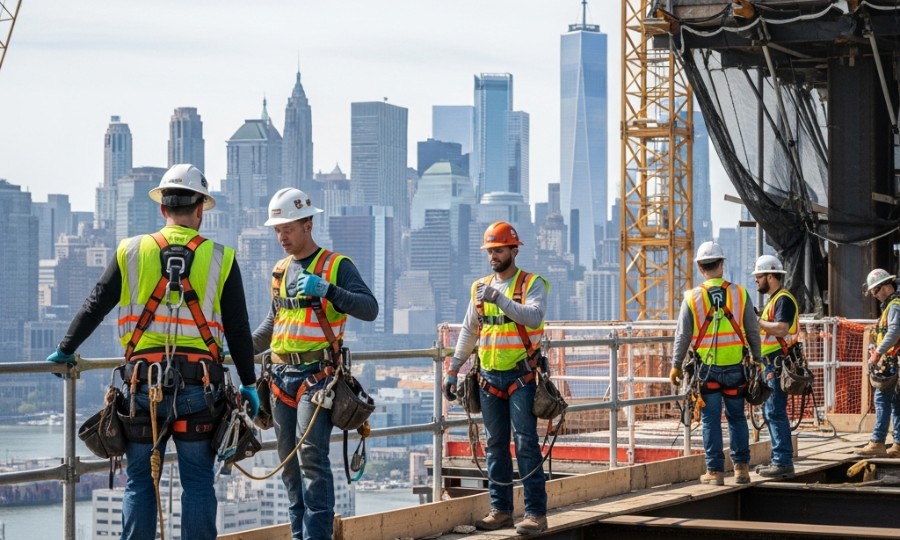
Imagine starting your day on an NYC construction site, the city buzzing with relentless energy around you. You’re focused, skilled, and ready for the job, but are you truly safe? It’s a question every worker, supervisor, and project manager should consider daily, especially as we delve into the projected insights from the NYC Construction Safety Report for 2024-2025.
We know this feels like a constant battle, doesn’t it? The truth is, while New York City strives for safer workplaces, the latest data from sources like the NYC Department of Buildings (DOB) and the Bureau of Labor Statistics (BLS) consistently highlight critical areas where vigilance simply can’t slip. This isn’t just about statistics; it’s about the lives and livelihoods of the dedicated individuals who build our incredible city. So, let’s explore what these key insights mean for your protection on the job.
Understanding the Landscape: NYC’s Evolving Safety Record
New York City’s construction industry is unique, a dynamic ecosystem of towering projects and intricate renovations. With such intensity comes inherent risk, which is why organizations like the DOB and BLS are constantly monitoring trends and enforcing regulations. They’re not just collecting data; they’re trying to paint a picture of where our efforts are working and, more importantly, where they aren’t.
Historically, significant strides have been made in construction safety. For instance, the emphasis on comprehensive safety training, including requirements like those mandated by NYC Local Law 196 (which specifies 40 hours of Site Safety Training for most workers), has demonstrably raised awareness. But are we doing enough? The ongoing reports often show a stubborn persistence of certain types of accidents, suggesting that while regulations are there, their consistent application and adherence still need our collective focus. You might wonder, ‘How much can a report really change?’ Well, these insights often drive policy adjustments and targeted enforcement, directly impacting your day-to-day work environment.
The Alarming Truth: Falls from Height Remain a Top Concern
When we look at the raw numbers, falls from height consistently rank as one of the deadliest and most common construction accidents in NYC. Whether it’s from scaffolding, ladders, roofs, or unprotected edges, the impact can be devastating. The BLS, for example, frequently reports falls as a leading cause of fatalities in construction nationwide, and NYC’s dense, vertical construction environment only exacerbates this risk.
Consider a scenario: a worker on a midtown high-rise is adjusting a scaffold, perhaps rushing a bit because of a tight deadline. One misstep, one faulty guardrail, or an improperly secured platform can change everything in an instant. The NYC DOB regularly issues violations related to inadequate fall protection, improper scaffolding setup, and lack of safety netting. These aren’t just technical infractions; they’re direct threats to life and limb. It’s a stark reminder that even with all the regulations in place, human error or oversight can have tragic consequences. What can you do? Always inspect your equipment, ensure fall protection is correctly used, and never hesitate to speak up if something looks unsafe. Your life, and your colleagues’ lives, could depend on it.
When Gravity Strikes: The Menace of Falling Objects
Another prevalent and equally dangerous category highlighted in safety reports is accidents involving falling objects. On a busy NYC site, with multiple trades working simultaneously, the risk of a tool, piece of debris, or equipment falling from above is very real. These incidents, often categorized under ‘struck-by’ accidents, can cause severe head injuries, concussions, or worse, even if the object isn’t particularly heavy. A wrench falling from three stories up gains significant momentum, doesn’t it?
The DOB reports often detail incidents where materials weren’t properly secured, or overhead protection was insufficient. Think about a crane lifting materials over an active work zone without adequate barricades, or a worker on an upper floor leaving tools near an unprotected edge. These are incredibly common scenarios that, frankly, shouldn’t happen. Best practices, like using tool lanyards, implementing strict drop zones, ensuring proper netting, and mandatory hard hat usage (which, let’s be honest, should be a given), are designed to mitigate these exact risks. You might be thinking, ‘We already do that!’ But the data suggests that in too many cases, the adherence isn’t 100% consistent.
Beyond the Numbers: Proactive Measures for Worker Protection
Understanding the risks is just the first step. The true value of these safety reports lies in guiding our proactive efforts. We can’t simply react to accidents; we need to cultivate an environment where they’re prevented in the first place. This requires a multi-faceted approach involving everyone on site, from the newest laborer to the most seasoned project manager.
First, let’s look at robust safety training. Beyond the mandated hours, continuous education on site-specific hazards and emergency procedures is crucial. Many companies are now integrating virtual reality (VR) simulations for hazard recognition, allowing workers to experience dangerous scenarios in a safe, controlled environment. Then, we’ll explore the critical role of site safety plans. These aren’t just bureaucratic documents; they’re living guides that should be regularly reviewed, updated, and communicated to every single person stepping onto the site. A good plan anticipates potential issues and lays out clear protocols for prevention and response.
Empowering Workers: Your Role in a Safer Site
You, the individual worker, are perhaps the most vital component in any safety program. You’re on the ground, you see the immediate conditions, and you’re often the first to spot a potential hazard. The Occupational Safety and Health Act of 1970 (OSHA) grants you the right to a safe workplace, and that includes the right to refuse unsafe work without fear of retaliation. This isn’t just a legal protection; it’s an ethical imperative.
Consider this example: a new apprentice notices that a ladder isn’t properly secured, or a guardrail seems loose. Their immediate instinct might be to just push through, not wanting to cause a fuss. However, speaking up, reporting it to a supervisor, or even utilizing anonymous reporting channels can genuinely save lives. It’s about fostering a culture where safety concerns are not only heard but actively addressed. We believe every worker should feel empowered to be a safety advocate, not just for themselves but for their entire crew. Isn’t your well-being worth that brief conversation?
Regulatory Reinforcements: How Laws Protect You
It’s easy to view regulations as burdensome, but they are, in fact, your ultimate protection. The NYC DOB, for example, is relentless in its enforcement, conducting site inspections, issuing violations, and imposing hefty fines for non-compliance. These aren’t just punitive measures; they’re designed to compel adherence to safety standards that are literally life-saving. For instance, consistent enforcement of scaffold safety regulations directly reduces the risk of falls from height, and strict protocols for material handling minimize the danger of falling objects.
The DOB also collaborates with other agencies and industry stakeholders to develop new rules and update existing ones, always aiming to respond to emerging trends and technologies. Generally speaking, these updates are informed by the very reports we’re discussing. Staying informed about these changes, and understanding how they apply to your specific project, is a form of self-protection. It helps you recognize when a site might not be in full compliance, allowing you to raise concerns proactively. In most cases, a well-informed worker is a safer worker.
The insights from the NYC Construction Safety Report 2024-2025 (and its predecessors) aren’t just a collection of data points; they’re a call to action. While falls from height and falling objects remain persistent challenges, they are, crucially, preventable challenges. By understanding the risks, empowering ourselves and our colleagues, and adhering rigorously to established safety protocols and regulations, we can collectively work towards a New York City where every construction site is as safe as it can possibly be. Let’s make safety our shared foundation, every single day.
Free Case Consultation
Injured in an accident? Contact Rosenberg, Minc, Falkoff & Wolff for a free and confidential case review with an experienced NYC personal injury attorney.