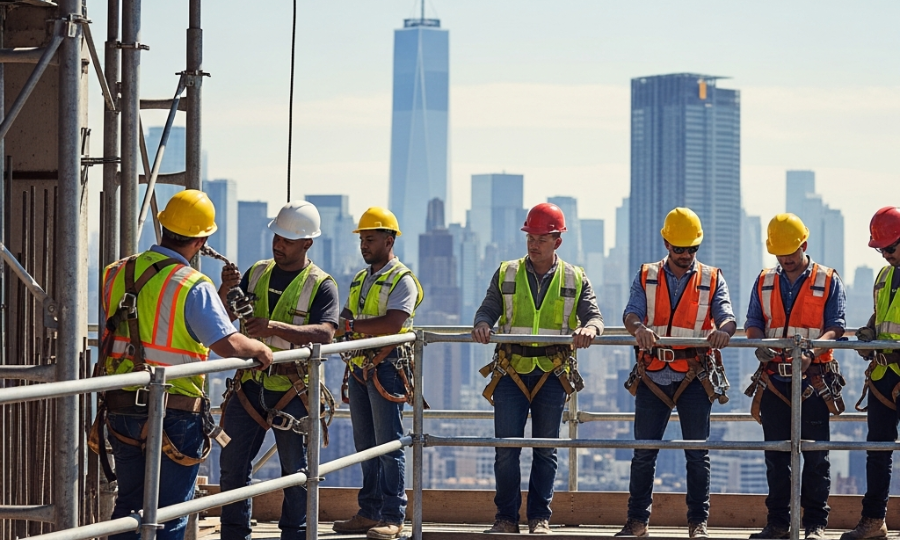
Understanding New York’s Scaffold Law and Your Rights
New York’s Labor Law 240, widely known as the “Scaffold Law,” stands as a critical protection for construction workers. This unique statute holds property owners and contractors strictly liable for gravity-related accidents. Consequently, if you suffer injuries from a fall or a falling object on an NYC construction site, this law often provides a clear path to compensation. Our firm understands the profound impact such injuries have on workers and their families.
Key Takeaways
- New York’s Labor Law 240, the "Scaffold Law," establishes strict liability for gravity-related construction accidents, meaning injured workers do not need to prove negligence.
- The Scaffold Law covers incidents like falls from ladders or scaffolding and injuries from falling objects, providing a direct path to compensation.
- Worker advocacy groups cite studies suggesting the Scaffold Law contributes to a lower rate of fall-related fatalities in New York compared to states without similar strict liability laws.
- Any reform to the Scaffold Law, such as adopting comparative negligence, could reduce a worker’s compensation based on their perceived fault, significantly altering current protections.
The Scaffold Law ensures that workers injured due to inadequate safety equipment or procedures receive justice. It applies to situations where safety devices like scaffolds, ladders, hoists, or ropes fail to protect workers from elevation risks. This means the law protects workers from falls from heights and being struck by falling objects.
Strict Liability: A Cornerstone of Worker Protection
Labor Law 240 establishes strict liability. This means a worker does not need to prove negligence on the part of the owner or contractor. Instead, the focus remains on whether proper safety devices were provided and maintained. Also, if a fall or falling object incident occurs, and the safety equipment was absent or failed, liability often attaches automatically. This is a powerful legal tool for injured construction workers in New York City.
Consequently, this legal framework significantly differs from general negligence claims. In typical personal injury cases, the injured party must demonstrate the defendant’s carelessness. However, the Scaffold Law removes this burden from the worker. It places responsibility squarely on those who control the construction site. Therefore, it simplifies the legal process for many accident victims.
Common Scenarios Covered by the Scaffold Law
Many types of construction accidents fall under the purview of the Scaffold Law. For example, a worker falling from an unstable ladder on a Brooklyn high-rise project qualifies. Similarly, a carpenter struck by a falling beam from an elevated platform in Queens would also have a claim. These gravity-related incidents are central to the law’s application.
Also, the law covers a wide array of equipment failures. This includes inadequate scaffolding, faulty hoists, or defective safety harnesses. A worker using a scaffold in a Manhattan renovation project deserves secure equipment. If that scaffold collapses, the worker suffers severe injuries. The Scaffold Law then provides a remedy.
The Ongoing Debate Surrounding Labor Law 240
New York’s Scaffold Law faces constant challenges from various groups. Critics, often representing insurance companies and construction firms, argue the law is too costly. They claim it drives up insurance premiums and project expenses across the state. Consequently, they advocate for significant reforms or even outright repeal. They propose shifting to a comparative negligence standard.
However, worker advocacy groups and unions strongly defend the law. They assert it acts as a crucial deterrent against unsafe practices on job sites. They point to studies indicating a lower rate of fall-related fatalities in New York compared to other states without strict liability laws. Therefore, they argue the law saves lives and prevents countless severe injuries. This debate continues to shape the future of construction safety.
Potential Reforms and Their Impact on Injured Workers
Discussions about modifying the Scaffold Law often center on adopting a comparative negligence standard. Under such a system, a worker’s own contribution to an accident could reduce their compensation. For example, if a worker was 20% responsible for their fall, their damages might decrease by 20%. This represents a significant departure from the current strict liability approach.
Also, any reform could complicate the claims process for injured individuals. It would introduce new arguments about shared fault. This shift could make it harder for construction workers injured in New York to recover full compensation. Consequently, it could place a heavier burden on accident victims to prove they were not at fault. Our firm closely monitors these legislative discussions.
Why the Scaffold Law Matters for NYC Construction Sites
New York City’s skyline constantly evolves, with numerous construction projects underway daily. From towering skyscrapers in Midtown to residential developments in the Bronx, these sites are inherently dangerous. The sheer volume of work and the complexity of these projects increase the risk of serious accidents. Therefore, strong worker protections remain vital.
The Scaffold Law serves as a powerful incentive for contractors to prioritize safety. It compels them to provide appropriate fall protection and secure working conditions. Without it, some argue, construction companies might cut corners, leading to more injuries and fatalities. This law directly impacts safety standards across all five boroughs.
Navigating a Scaffold Law Claim
If you have suffered an injury in a construction accident governed by the Scaffold Law, prompt action is crucial. First, seek immediate medical attention for your injuries. Document everything related to the incident, including photos of the scene and your injuries. Identify any witnesses present during the accident.
Next, contact an experienced personal injury attorney who specializes in New York construction accidents. Our legal team possesses deep knowledge of Labor Law 240. We can evaluate your case, gather necessary evidence, and file a claim on your behalf. We protect your rights every step of the way. This includes navigating complex legal procedures.
The Role of an Experienced NYC Personal Injury Lawyer
Our firm helps individuals understand their rights under the New York Scaffold Law. We offer compassionate and authoritative legal representation for injured construction workers. We meticulously investigate accident scenes. Also, we consult with industry experts to build strong cases. We strive to maximize compensation for medical expenses, lost wages, and pain and suffering.
We handle cases involving falls from ladders, scaffolding collapses, and objects striking workers. Our dedicated legal professionals advocate tirelessly for every client. We understand the unique challenges faced by those injured on job sites. Our goal is to secure the financial future for accident victims. We provide clear guidance and support throughout the entire legal process. We ensure your voice is heard.
Protecting Your Future After a Construction Injury
The future of New York’s Scaffold Law remains a topic of considerable debate. However, its current protections are robust for injured workers. This law offers a vital lifeline for those who suffer serious injuries due to gravity-related incidents. It holds responsible parties accountable for dangerous working conditions.
Therefore, if you or a loved one has sustained an injury in a fall or falling object incident on an NYC construction site, do not delay. You need to understand your legal options. Our firm offers a free consultation to discuss your specific situation. We help you take confident next steps toward securing the compensation you deserve. Protecting your NYC construction worker rights is our priority.
Related Reading
Frequently Asked Questions
What types of accidents does New York’s Scaffold Law cover?
The New York Scaffold Law (Labor Law 240) specifically covers gravity-related accidents on construction sites. This includes falls from heights, such as from ladders or scaffolding, and injuries sustained from falling objects. It applies when safety devices fail to adequately protect workers.
How does "strict liability" under the Scaffold Law differ from other injury claims?
Under strict liability, an injured construction worker does not need to prove the property owner or contractor was negligent. Instead, if a gravity-related accident occurs due to inadequate or failed safety equipment, liability often attaches automatically. This simplifies the legal burden for the injured party, unlike typical negligence cases.
Could the Scaffold Law change in the future, and how might that affect my rights?
Yes, the Scaffold Law faces ongoing debate, with some advocating for reforms like adopting a comparative negligence standard. If this change occurs, a worker’s compensation could be reduced based on their perceived fault in an accident. This would make it more challenging to recover full damages compared to the current strict liability system.
This article was drafted with AI assistance. Please verify all claims and information for accuracy. The content is for informational purposes only and does not constitute professional advice.
Free Case Consultation
Injured in an accident? Speak directly with an experienced NYC personal injury attorney at
Rosenberg, Minc, Falkoff & Wolff.
Your consultation is free, confidential, and risk-free.
No obligation – No upfront fees – You don’t pay unless we win
Follow RMFW Law for legal insights and case results: