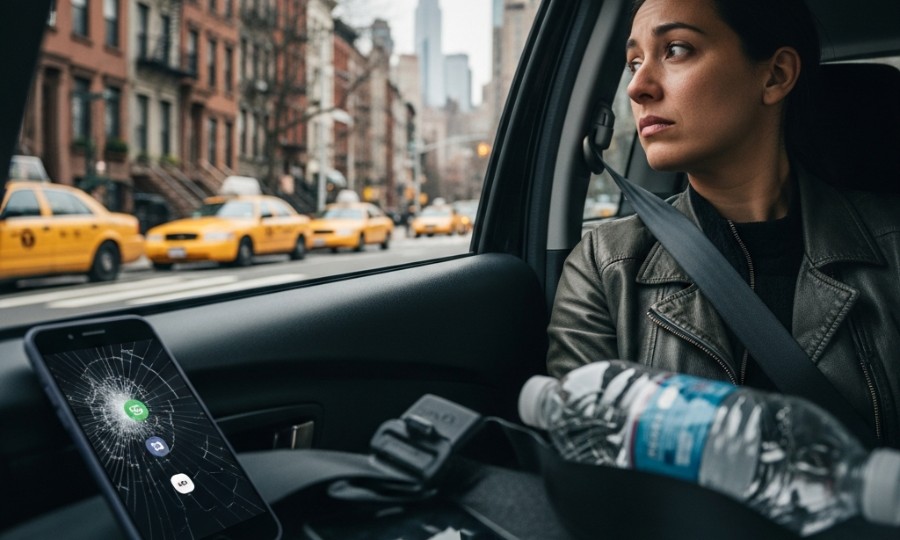
You hop into an Uber or Lyft, expecting a routine trip across New York City. It’s a convenience we’ve all come to rely on, isn’t it? But what happens when that routine trip takes a terrifying turn, leaving you injured in an accident that wasn’t your fault? Here’s the thing: while rideshare services offer incredible ease, navigating the aftermath of an accident as a passenger in NYC can feel incredibly complex and, frankly, overwhelming.
It’s a scenario no one wants to imagine, yet it happens more often than you might think. One moment you’re scrolling through your phone, the next you’re jolted forward, the sound of screeching tires and shattering glass filling the air. As a passenger, you’re usually an innocent bystander, caught in the crossfire. But what are your rights, and what crucial steps should you take immediately to protect your health and any potential legal claim? We’re going to break it all down, offering clear, actionable advice from a professional standpoint.
The Unique Landscape of NYC Rideshare Accidents
You might wonder, aren’t all car accidents essentially the same? Well, in New York City, rideshare accidents involving Uber or Lyft carry a distinct set of complexities, largely due to specific state and local regulations. Unlike a typical fender bender between two private vehicles, these incidents involve commercial entities, multiple insurance policies, and often, a layer of confusion about who’s actually responsible.
New York State has specific laws governing rideshare companies, known as Transportation Network Companies (TNCs). These laws mandate substantial insurance coverage, particularly when a driver is actively engaged in a rideshare trip. This isn’t just a regular personal auto policy; we’re talking about a significant commercial policy – for a trip picked up outside New York City, at least $1.25 million in liability coverage when the driver is transporting a passenger or en route to pick one up. That $1.25 million floor comes from New York’s TNC statute, Vehicle and Traffic Law Article 44-B, which does not authorize a TNC driver to pick up a passenger for a TNC prearranged trip in a city of one million or more. A trip picked up in the five boroughs is therefore insured under New York City Taxi and Limousine Commission for-hire vehicle rules instead. This crucial detail can make a massive difference in the value and handling of your claim, especially if your injuries are severe. For instance, imagine you’re a passenger in an Uber heading to JFK, and another vehicle runs a red light, causing a serious collision. The complexity isn’t just about proving fault for the collision; it’s about understanding which insurance policy kicks in and to what extent, which can be a real headache without the right guidance.
Immediate Actions: Your First Steps After an NYC Rideshare Crash
The moments immediately following an accident can be chaotic and frightening. But taking the right steps can significantly impact your health recovery and the strength of your legal claim. First and foremost, your safety and well-being are paramount. If you’re able, try to remain calm and assess your situation.
- Seek Medical Attention Immediately: Even if you don’t feel injured right away, adrenaline can mask pain. Call 911 or ask someone to do so if you’re hurt. Get checked out by paramedics at the scene or go to an urgent care center or emergency room as soon as possible. Delaying medical treatment can not only jeopardize your health but also make it harder to link your injuries directly to the accident later on. It’s just smart to get a professional opinion, you know?
- Call the Police: Always ensure the police are called to the scene to file an official accident report. This report is a vital piece of evidence for any future insurance claim or lawsuit.
- Gather Information (If Safe to Do So):
- Driver Information: Get the name, phone number, and insurance information of your rideshare driver and any other drivers involved.
- Vehicle Information: Note the license plate numbers, make, model, and color of all vehicles.
- Witnesses: Ask for contact information from anyone who saw the accident. Their testimony can be incredibly valuable.
- Photos/Videos: Use your phone to take pictures of the accident scene, vehicle damage, traffic signals, road conditions, and any visible injuries you or others sustained. These visual records are incredibly powerful.
- Report to Uber/Lyft: As soon as you’re able, report the accident through the app. This creates an official record with the rideshare company.
Navigating Insurance: Who Pays When You’re a Passenger?
This is where things get particularly nuanced. You might be thinking, “My driver’s insurance will cover it, right?” Not necessarily. The truth is, the insurance landscape for rideshare accidents in New York is layered. When a rideshare driver is actively transporting a passenger or en route to pick one up, high-limit commercial coverage rather than an ordinary personal auto policy is what usually responds. Which policy that is depends on where the trip was picked up. For a trip picked up outside NYC, New York’s TNC law requires at least $1.25 million in rideshare liability coverage; for a trip picked up in the city, TLC-licensed vehicles carry commercial policies of at least $100,000/$300,000. Lyft’s own driver insurance page states that Lyft does not procure insurance for rides with TLC drivers originating in the five boroughs of New York City, so the policy carried on the vehicle itself is what matters here.
However, what if the rideshare driver was logged into the app but hadn’t yet accepted a ride, or was between rides? In those scenarios a lower tier applies. Outside New York City, where Article 44-B authorizes a TNC driver to pick up a passenger for a TNC prearranged trip, the statute sets the logged-on-but-not-yet-engaged minimum at $75,000 per person and $150,000 per accident for bodily injury, and that group policy minimum is required by law rather than optional, so a driver’s personal policy does not displace it. Where the vehicle is a TLC-licensed for-hire vehicle, which is how Uber and Lyft trips picked up in the five boroughs are supplied, the coverage to look to is that vehicle’s own commercial policy rather than a TNC coverage tier. And what if the other driver involved in the accident was at fault and uninsured or underinsured? Your options can shift again.
For example, imagine you’re a passenger, and your Uber driver is rear-ended by a reckless commercial truck driver. In this case, the truck driver’s commercial insurance would likely be the primary source of compensation. But if the truck driver had minimal insurance, or if your Uber driver was partially at fault, then the commercial policy covering the rideshare vehicle might still come into play as a secondary or excess policy. Understanding which policy applies and how to file a claim against it is critical, and it’s definitely not something you should try to figure out alone when you’re also recovering from injuries.
Protecting Your Claim: Common Mistakes to Avoid
We know this feels overwhelming, but avoiding certain missteps can significantly protect your potential claim for damages. You might be thinking, “I just want to get this over with,” but rushing things can cost you dearly.
- Don’t Delay Medical Treatment: We’ve stressed this, but it bears repeating. Gaps in medical treatment can be used by insurance companies to argue that your injuries weren’t severe or weren’t caused by the accident.
- Don’t Give Recorded Statements Without Legal Counsel: Insurance adjusters, even those from your own rideshare company, aren’t on your side. Their goal is to minimize payouts. Anything you say can be used against you. Politely decline to give a recorded statement until you’ve consulted with an attorney.
- Don’t Accept a Quick Settlement Offer: Initial offers are almost always lowball. Insurance companies often try to settle quickly before you fully understand the extent of your injuries or the long-term costs involved.
- Don’t Discuss Your Accident on Social Media: Anything you post online, even private messages, can be discovered and used as evidence against you. Keep details of your accident and injuries private.
When to Call for Help: The Role of a Personal Injury Lawyer in NYC
Navigating the aftermath of an NYC rideshare accident, especially as an injured passenger, is rarely straightforward. Dealing with multiple insurance companies, understanding complex New York State laws, and proving the full extent of your damages can be a full-time job – a job you shouldn’t have to take on while recovering from injuries. This is precisely where an experienced personal injury lawyer comes in.
A lawyer specializing in rideshare accidents can:
- Investigate Thoroughly: They’ll gather all necessary evidence, including police reports, medical records, witness statements, and vehicle data.
- Determine Liability: They’ll identify all at-fault parties and the applicable insurance policies, whether it’s the rideshare company’s commercial policy, the driver’s personal policy, or another driver’s insurance.
- Handle Communication: Your attorney will manage all correspondence with insurance adjusters, protecting you from common tactics used to devalue claims.
- Accurately Assess Damages: Beyond immediate medical bills, a lawyer can help you claim compensation for lost wages, future medical care, pain and suffering, and other long-term impacts. I believe many people underestimate the true cost of their injuries over time.
- Negotiate for Fair Compensation: They’ll tirelessly advocate on your behalf to secure the maximum compensation you deserve, taking your case to court if necessary.
In my experience, having a legal professional by your side can significantly reduce your stress and improve your outcome. You might be thinking this won’t work because lawyers are expensive, but many personal injury attorneys work on a contingency fee basis, meaning you don’t pay unless they win your case.
Your Path Forward: Protecting Your Rights as an Injured Passenger
Being injured in an NYC Uber or Lyft accident is a harrowing experience, and as a passenger, you deserve to have your rights protected. While you’re focusing on healing, remember that taking swift, informed action after the crash is crucial. From seeking immediate medical attention to meticulously documenting the scene and, most importantly, consulting with an experienced personal injury attorney, each step helps build a strong foundation for your claim.
Don’t let the complexity of rideshare insurance or the intimidating tactics of insurance companies deter you. Your well-being and financial recovery are too important. If you find yourself in this unfortunate situation, remember these guidelines, and don’t hesitate to reach out for professional legal advice. You don’t have to navigate this challenging journey alone; help is available.
This article was drafted with AI assistance. Please verify all claims and information for accuracy. The content is for informational purposes only and does not constitute professional advice.
Free Case Consultation
Injured in an accident? Speak directly with an experienced NYC personal injury attorney at
Rosenberg, Minc, Falkoff & Wolff. Your consultation is free, confidential, and risk-free.
No obligation • No upfront fees • You don’t pay unless we win