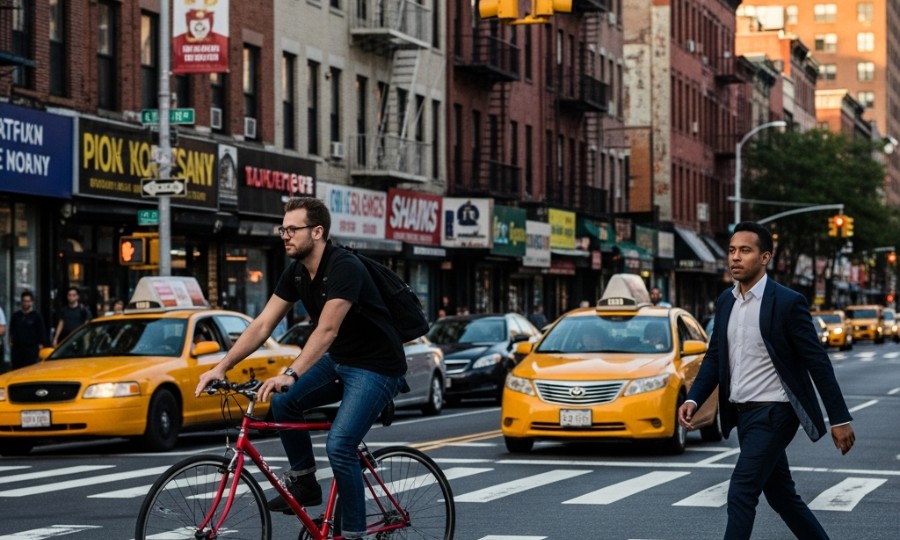
Living in Queens, you’re likely no stranger to its vibrant energy, diverse communities, and, let’s be honest, its bustling streets. For pedestrians and cyclists, navigating this dynamic environment can sometimes feel like a high-stakes game. We’ve all seen the near misses, haven’t we? The truth is, the concern isn’t just anecdotal; official data from the New York City Department of Transportation (NYC DOT) and the Vision Zero initiative consistently highlight the sobering reality of pedestrian and cyclist accidents across the city, and Queens is certainly no exception. It’s a worry many of us carry, especially when we or our loved ones are out walking or biking.
When an accident does happen, the aftermath can be devastating, both physically and emotionally. You’re left not only with injuries but also with a mountain of questions: Who’s responsible? What are my rights? How will I pay for this? It’s a lot to process, and honestly, it can feel incredibly overwhelming. That’s why understanding the ins and outs of accident liability in Queens is so crucial. Let’s delve into what you need to know to protect yourself and seek justice if the unthinkable occurs.
The Alarming Reality: Pedestrian and Cyclist Safety in Queens
Queens, with its sprawling neighborhoods, busy commercial corridors like Northern Boulevard, and major thoroughfares connecting to Manhattan and Long Island, presents unique challenges for vulnerable road users. Despite significant efforts under the Vision Zero initiative, which aims to eliminate traffic fatalities and serious injuries, accidents involving pedestrians and cyclists remain a pressing issue. Data consistently shows that speeding, distracted driving, and failure to yield are major contributors to these incidents.
You might wonder, why Queens specifically? Well, its sheer size and diverse urban landscape mean a mix of residential streets, arterial roads, and complex intersections that can be particularly hazardous. For instance, intersections known for high traffic volume and multiple turning movements often become hotspots for collisions. We’re talking about places where drivers might be rushing, or simply not paying enough attention, and a pedestrian stepping into a crosswalk becomes invisible to them. It’s a dangerous combination, wouldn’t you agree?
The city has implemented various safety measures, from protected bike lanes to leading pedestrian intervals at traffic lights, but the human element—driver behavior, pedestrian awareness, and cyclist adherence to traffic laws—remains paramount. Still, when an accident occurs, it’s frequently due to a driver’s negligence, and knowing how to prove that is key.
Unpacking Common Accident Causes on Queens’ Streets
When we talk about liability, we’re fundamentally discussing who was negligent and whose actions (or inactions) directly led to the accident. In Queens, just like in other dense urban areas, certain types of driver behavior frequently contribute to pedestrian and cyclist injuries. Here are some of the most common scenarios:
-
Distracted Driving: This is a pervasive problem. A driver checking a text, adjusting their GPS, or even just looking away for a second can have catastrophic consequences. Think about a cyclist riding safely in a bike lane on Queens Boulevard; if a driver swerves slightly while looking at their phone, that cyclist has virtually no protection.
-
Failure to Yield: Drivers turning left or right often fail to see or yield to pedestrians in crosswalks or cyclists approaching an intersection. It’s a common cause of serious injury. Imagine you’re crossing a street in Astoria with the right-of-way, and a driver, in a hurry to make their turn, simply doesn’t stop. That’s a classic example of negligence.
-
Speeding and Reckless Driving: Exceeding the speed limit, especially on residential streets, drastically reduces a driver’s reaction time and increases the severity of any impact. A driver speeding down a street in Flushing might not be able to stop in time if a child suddenly darts into the street, or even if an adult is simply crossing legally.
-
“Dooring” Incidents: This occurs when a driver or passenger opens a car door into the path of an oncoming cyclist. It’s often unexpected and can cause a cyclist to be thrown into traffic or onto the pavement. New York State law actually requires drivers and passengers to ensure it’s safe before opening a door into traffic, but it happens all too frequently.
-
Driving Under the Influence: Impaired drivers have significantly reduced reaction times and judgment, making them a grave danger to everyone on the road, especially vulnerable pedestrians and cyclists.
In most of these situations, the driver’s actions constitute negligence under New York law. But how do you prove it?
Determining Liability: Who’s At Fault in a Queens Accident?
Establishing liability is the cornerstone of any personal injury claim. In New York, we operate under a system of “pure comparative negligence.” What does this mean for you? Essentially, if you’re found to be partially at fault for the accident, your compensation can be reduced by your percentage of fault. For example, if a jury determines you’re 20% responsible for an accident because you weren’t using a crosswalk, and your damages are $100,000, you’d only recover $80,000. It’s a system designed to be fair, but it also means every bit of evidence matters.
2026 update: New York’s pure comparative negligence rule changed for motor vehicle accidents. Under CPLR § 1411(b) (effective May 27, 2026), an injured person whose share of fault is greater than the other party’s — or the combined fault of all defendants — is now barred from recovering in a motor-vehicle case. Someone 50% or less at fault can still recover, with damages reduced by their percentage of fault. Pure comparative negligence still applies to non-vehicle cases such as slip-and-fall and premises claims.
To prove liability, you’ll need to demonstrate several key elements:
-
Duty of Care: All drivers have a legal duty to operate their vehicles safely and follow traffic laws to prevent harm to others.
-
Breach of Duty: The driver failed in this duty (e.g., they were speeding, distracted, or failed to yield).
-
Causation: The driver’s breach of duty directly caused your injuries.
-
Damages: You suffered actual losses (medical bills, lost wages, pain and suffering) as a result of those injuries.
Gathering evidence immediately after an accident is critical. This includes police reports, witness statements, photographs or videos of the scene, and detailed medical records. Sometimes, surveillance footage from nearby businesses can be invaluable, too. Don’t underestimate the power of a clear photograph of the scene, the vehicle, or your injuries right after it happens. This initial documentation can make or break your case, so it’s something you simply can’t overlook.
Your Legal Path Forward: Seeking Justice After an Injury
If you’ve been injured in a pedestrian or cyclist accident in Queens, the first priority, of course, is your health. Seek medical attention immediately, even if you feel okay. Some injuries, like concussions or internal damage, aren’t always apparent right away. Once your immediate medical needs are addressed, what’s next?
Here’s the thing: dealing with insurance companies can be incredibly frustrating. Their primary goal is often to minimize their payout, not necessarily to ensure you’re fully compensated. This is where experienced legal counsel becomes invaluable. A knowledgeable personal injury attorney in New York understands the nuances of state traffic laws, local regulations, and how to effectively negotiate with insurance adjusters.
Your attorney can help you:
-
Investigate the Accident: They’ll gather evidence, interview witnesses, and reconstruct the events to build a strong case.
-
Determine All Liable Parties: Sometimes, it’s not just the driver. It could involve the vehicle owner, or in rare cases, even a municipality for unsafe road conditions.
-
Calculate Your Damages: This includes not just your current medical bills and lost wages, but also future medical needs, lost earning capacity, and compensation for pain and suffering. Have you thought about how much a long-term physical therapy regimen might cost? It adds up quickly.
-
Navigate the Legal Process: From filing the initial claim to negotiating a settlement or representing you in court, they’ll guide you every step of the way.
It’s also important to remember the statute of limitations in New York. Generally, you have three years from the date of the accident to file a personal injury lawsuit. While three years might sound like a long time, crucial evidence can disappear quickly, and memories fade. Acting sooner rather than later is always in your best interest.
Empowering Yourself: Staying Safe and Prepared
While we can’t control every driver on the road, we can certainly take steps to enhance our own safety. For pedestrians, this means always using crosswalks, obeying traffic signals, and making eye contact with drivers. For cyclists, wearing a helmet, using lights and reflectors, and signaling your turns are non-negotiables. Staying visible, especially at night, is incredibly important.
Beyond personal safety, we’re all part of the community advocating for safer streets. Supporting initiatives like Vision Zero and speaking up about dangerous intersections in your Queens neighborhood can make a real difference. After all, don’t we all deserve to feel safe when we’re walking or biking in our own community?
If you or a loved one has been involved in a pedestrian or cyclist accident in Queens, don’t face the complex legal system alone. Understanding accident liability is your first step towards seeking justice and fair compensation. Reach out to a qualified personal injury attorney today; they can provide clarity, support, and the professional guidance you need to navigate this challenging time. You’ve got enough on your plate recovering, so let someone else handle the legal heavy lifting.
Free Case Consultation
Injured in an accident? Contact Rosenberg, Minc, Falkoff & Wolff for a free and confidential case review with an experienced NYC personal injury attorney.