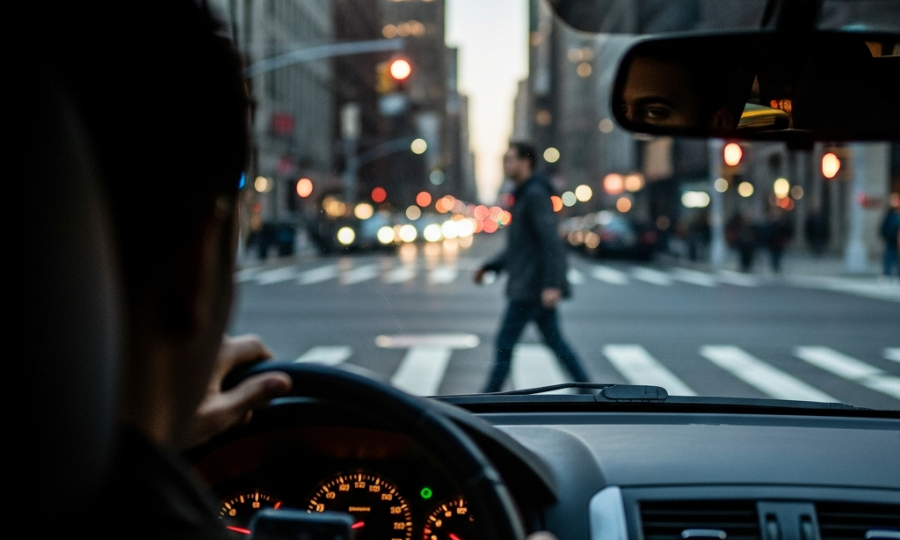
Drivers in New York City navigate some of the busiest streets in the world. Pedestrians face constant risks. Unfortunately, many drivers underestimate the broad dangers of distracted driving beyond just cell phone use. Understanding these common mistakes helps prevent serious pedestrian accidents in our bustling city.
Key Takeaways
- Traffic fatalities in New York City often involve distracted drivers, highlighting the severe risk beyond just cell phone use.
- A driver distracted by an in-car navigation system for just five seconds at 55 mph effectively drives the length of a football field blind.
- Driving while fatigued for 18 hours or more impairs judgment and reaction time similarly to a 0.05% blood alcohol content.
- New York State laws specifically prohibit mobile telephone and portable electronic device use while driving, holding drivers responsible for these specific diversions from the road.
As a trusted NYC personal injury lawyer, our firm sees the devastating impact of driver distraction daily. Pedestrian injuries are often severe. Therefore, recognizing and avoiding these prevalent driver errors is crucial for everyone’s safety.
Mistake 1: Believing Only Phones Cause Distraction
Many drivers associate distracted driving solely with cell phones. However, this is a narrow view. Any activity diverting attention from the road can lead to catastrophic consequences for unsuspecting pedestrians. The National Highway Traffic Safety Administration defines distracted driving broadly. It includes visual, manual, and cognitive distractions. Therefore, drivers must recognize all potential hazards.
For example, a driver in Queens might glance at a billboard. This momentary visual distraction can mean missing a pedestrian in the crosswalk. Active voice ensures clarity here. The legal implications of such an accident are significant. Also, New York State law specifically prohibits hand-held mobile phone and portable electronic device use, not any action impairing focus. This broader understanding protects everyone.
Actionable Takeaway: Understand distraction is multifaceted. Focus entirely on the road. Maintain constant vigilance, especially in high-traffic pedestrian areas.
Mistake 2: Overly Relying on In Car Navigation Systems
Modern vehicles often feature sophisticated GPS and navigation systems. These tools are helpful for finding routes across Brooklyn or Manhattan. However, adjusting settings or glancing at maps repeatedly pulls a driver’s eyes from the street. Even a few seconds of diverted attention can be enough time to miss a pedestrian stepping into a crosswalk. This significantly increases accident risk.
A driver might be searching for a specific address in the Bronx. Their eyes leave the road for five seconds. During that time, a car travels the length of a football field at 55 mph. Consequently, a pedestrian accident becomes far more likely. This kind of distraction is entirely preventable. Our firm has seen many cases where navigation system use directly contributed to a crash.
Actionable Takeaway: Set your route before driving. Use audio cues rather than visual navigation whenever possible. Pull over safely if you need to make changes.
Mistake 3: Engaging with Vehicle Infotainment Systems
Today’s cars boast large touchscreens for music, climate control, and various apps. These infotainment systems offer convenience. Nevertheless, they demand significant visual and cognitive attention. Changing a radio station or adjusting temperature on a touchscreen takes focus away from the road. A driver’s hands may also leave the wheel. This creates dangerous conditions for pedestrians in busy areas like Queens or the Bronx.
A driver in Staten Island might try to pair a new device with their car’s Bluetooth. This complex task requires multiple steps and visual confirmation. Meanwhile, a child might dart between parked cars. The driver’s delayed reaction can have tragic results. Importantly, New York City traffic laws expect drivers to maintain full control. Engaging with complex systems while moving violates this expectation.
Actionable Takeaway: Operate infotainment systems only when stopped. Better yet, pre-set your preferences. Use steering wheel controls for basic functions if available.
Mistake 4: Eating or Drinking While Driving
Eating a meal or drinking coffee behind the wheel seems innocuous to some. Yet, these actions engage a driver’s hands, eyes, and mind. Spills cause sudden reactions. Reaching for food or beverages takes attention from the road. A moment of inattention can have severe repercussions. For instance, a driver might fail to notice a child darting into the street in a busy school zone.
Imagine a delivery driver eating lunch while navigating traffic in Midtown Manhattan. They might spill a drink. Their immediate reaction is to clean it up. During those critical seconds, they miss a pedestrian in a crosswalk. This common behavior is a major contributor to distracted driving incidents. It compromises both manual and cognitive focus. You risk both your safety and others’ safety.
Actionable Takeaway: Eat and drink before driving or pull over safely. Keep your focus entirely on the road ahead. Prioritize safety over convenience.
Mistake 5: Grooming or Personal Activities Behind the Wheel
Drivers sometimes use commute time for personal grooming. Applying makeup, fixing hair, or adjusting clothing diverts crucial attention. These activities demand visual focus and manual dexterity. Both are essential for safe driving. Even a quick check in the mirror can mean missing a pedestrian or cyclist. This is particularly dangerous on crowded New York City streets.
A driver on the FDR Drive might be adjusting their tie in the rearview mirror. Their eyes briefly leave the lane ahead. This small act can lead to drifting or delayed braking. Consequently, a rear-end collision or a pedestrian impact becomes more likely. New York law expects drivers to be fully engaged. Personal grooming activities diminish that necessary engagement. Always finish these tasks before driving.
Actionable Takeaway: Complete all personal grooming before starting your drive. Maintain full concentration on driving. Your appearance can wait; safety cannot.
Mistake 6: Overlooking Passenger Interactions
Passengers can also become a source of distraction. Engaging in intense conversations, mediating arguments, or attending to children in the backseat can divert a driver’s cognitive attention. While social interaction is natural, it should not compromise road safety. A driver must prioritize the road and other users, especially pedestrians. This responsibility rests solely with the driver.
Consider a parent driving through a residential area in Brooklyn. Their children argue loudly in the back. The parent turns to address them. In that moment, a pedestrian steps off the curb. The driver’s focus shifts from the road to the backseat. This split attention can have disastrous outcomes. Drivers are responsible for maintaining a safe environment inside their vehicle, which includes managing distractions. Therefore, drivers must assert control over their cabin environment.
Actionable Takeaway: Keep conversations calm. Address passenger needs during stops. Politely inform passengers that your full attention is needed for driving safety.
Mistake 7: Ignoring External Distractions
New York City offers countless sights and sounds. Billboards, street performers, construction sites, and even other accidents can capture a driver’s attention. While observing surroundings is part of driving, lingering gazes become dangerous distractions. Drivers must remain focused on the immediate traffic situation. This includes anticipating pedestrian movements, especially at intersections.
A driver on 5th Avenue might be captivated by a new storefront display. Their eyes drift from the road for several seconds. Meanwhile, a pedestrian pushes a stroller across the street. The driver’s delayed reaction could lead to a severe accident. Also, rubbernecking at accident scenes also creates hazards. It slows traffic and diverts attention from active driving. This behavior compounds risks for everyone on the road.
Actionable Takeaway: Acknowledge external events without staring. Quickly return your full attention to the road. Prioritize the dynamic traffic environment over static attractions.
Mistake 8: Adjusting Vehicle Controls While Moving
Many vehicle controls, like seat adjustments, mirror settings, or even heating and cooling vents, require manual and visual attention. Drivers often adjust these while driving. This takes their eyes and hands off the wheel. Even small adjustments can lead to significant blind spots or delayed reactions. Such delays are critical in heavy traffic or near pedestrian zones.
Imagine a driver on a busy street in Harlem trying to adjust their seat position. They lean forward, taking their eyes from the road. Simultaneously, their hand leaves the steering wheel. This brief lapse in control can cause them to swerve. They might then collide with another vehicle or strike a pedestrian. New York City traffic demands constant, unimpeded attention. Any adjustment should wait for a safe stop.
Actionable Takeaway: Adjust all vehicle settings before you begin your journey. Make any necessary changes only when safely pulled over. This ensures continuous focus.
Mistake 9: Being Drowsy or Fatigued
Fatigue severely impairs a driver’s ability to focus. It mirrors the effects of alcohol impairment. Drowsy driving slows reaction times. It also reduces awareness of surroundings. Many pedestrian accidents in New York City involve fatigued drivers. A tired driver might miss a traffic signal or fail to see a pedestrian crossing. This condition impacts judgment and motor skills.
A commercial truck driver, after a long shift, might feel their eyes heavy near a busy intersection in the Garment District. They could nod off for a moment. This micro-sleep can have devastating consequences. Studies show that being awake for 18 hours produces impairment similar to a blood alcohol content of 0.05%. Consequently, drowsy driving is a serious form of impairment. It jeopardizes pedestrian lives.
Actionable Takeaway: Never drive when you feel drowsy. Pull over and rest or find alternative transportation. Prioritize sleep and alertness before getting behind the wheel.
Mistake 10: Driving Under Emotional Distress
Strong emotions like anger, sadness, or stress can be incredibly distracting. An emotionally agitated driver may become aggressive. They might also lose focus on the road. Emotional distress impairs judgment and reaction time. This increases the risk of serious accidents, especially in dense urban environments. Such psychological distractions are often overlooked but are equally dangerous.
A driver, after a heated argument, speeds through a school zone in Astoria, Queens. Their mind remains on the argument, not the road. They fail to notice a crossing guard signaling children. This emotional distraction leads to dangerous driving behaviors. It is a severe form of cognitive impairment. Therefore, drivers must address their emotional state before operating a vehicle. Emotional control is a part of safe driving.
Actionable Takeaway: Address strong emotions before driving. If overwhelmed, pull over to compose yourself. Seek support if emotional distress frequently impacts your driving ability.
Mistake 11: Ignoring Traffic Laws and Signs
Disregarding speed limits, traffic signals, or pedestrian crossing signs is a form of cognitive distraction. Drivers who intentionally or unintentionally ignore these rules are not fully focused on safe operation. This behavior directly endangers pedestrians and other drivers. Obeying all traffic laws is fundamental to safe driving in New York City. These laws are designed for public safety.
A driver rushing through a yellow light in Lower Manhattan might accelerate without checking for pedestrians. This intentional disregard for a traffic signal constitutes a serious breach of duty. It demonstrates a lack of focus on collective safety. Such actions often lead to devastating T-bone collisions or pedestrian impacts. Also, traffic laws exist to create predictable, safe patterns for all road users. Ignoring them creates chaos.
Actionable Takeaway: Always observe and obey all traffic laws and signs. They exist to protect everyone. Your adherence prevents countless preventable accidents.
Mistake 12: Not Anticipating Pedestrian Behavior
New York City pedestrians can be unpredictable. They sometimes jaywalk or step into the street unexpectedly. A focused driver anticipates these behaviors. A distracted driver misses these crucial cues. This failure to anticipate often leads to collisions. Pedestrian safety relies heavily on driver vigilance and proactive thinking. Drivers must expect the unexpected.
Consider a delivery van driver in Times Square. They assume all pedestrians will use designated crosswalks. However, a tourist steps into the street mid-block. A driver who is not actively scanning the environment will likely react too late. Consequently, a serious injury can occur. Defensive driving means assuming others might make mistakes. It involves constant scanning and preparation for sudden movements. This vigilance is paramount in NYC.
Actionable Takeaway: Drive defensively. Always assume pedestrians may act unpredictably. Maintain a constant scan of your surroundings, especially in dense urban areas.
Mistake 13: Driving with Undiagnosed Vision or Hearing Issues
Uncorrected vision problems or hearing impairment can significantly hinder a driver’s ability to react. These issues prevent a driver from seeing or hearing critical cues. For example, they might miss a pedestrian in a crosswalk. They might also not hear an emergency vehicle approaching. Regular check-ups are vital for safe driving. Good sensory input is foundational to safe operation.
A driver with worsening eyesight might struggle to see a traffic sign quickly. This delay in processing information can lead to confusion. It can cause dangerous maneuvers. Similarly, a driver with hearing loss might not hear a car horn or a shouted warning. These sensory deficits create dangerous blind spots. New York State requires periodic vision tests for license renewal. This underscores the importance of clear vision for safe driving. Drivers must take this seriously.
Actionable Takeaway: Schedule regular vision and hearing tests. Correct any impairments immediately. Ensure your senses are sharp enough for the demands of driving.
Mistake 14: Over-Reliance on Advanced Driver Assistance Systems (ADAS)
Modern vehicles often feature ADAS technologies like lane-keeping assist or adaptive cruise control. These systems enhance safety. However, they are aids, not replacements for driver attention. Drivers who become complacent or assume the car will handle everything are dangerously distracted. They might fail to intervene when the system struggles. This complacency is a new form of distraction.
A driver using adaptive cruise control on the Long Island Expressway might start checking their phone. They believe the car will manage the distance. Suddenly, traffic ahead stops abruptly. The ADAS system might react, but the driver’s delayed manual override could prevent a collision. Also, these systems have limitations. They might not detect all obstacles or react perfectly in complex New York City traffic. Drivers must remain the primary operator. They must be prepared to take over at any moment.
Actionable Takeaway: Use ADAS features responsibly. Remain fully engaged and prepared to take control at all times. Never let technology replace your active driving role.
Mistake 15: Not Maintaining Your Vehicle Properly
Poorly maintained vehicles can become a source of distraction. Squealing brakes, worn-out tires, or a malfunctioning dashboard light demand attention. Addressing these issues while driving takes focus from the road. Regular maintenance prevents these operational distractions. It also ensures the vehicle operates safely. A well-maintained car helps you concentrate on the road.
Consider a driver whose windshield wipers are failing during a sudden downpour in Brooklyn. Their visibility drops dramatically. Their focus shifts to fixing the wipers, not watching the road. This mechanical distraction creates immense danger. Similarly, a persistent rattling noise can divert cognitive attention. It makes a driver anxious. Thus, regular oil changes, tire rotations, and system checks prevent these issues. Proper vehicle maintenance is a proactive safety measure. It minimizes distractions.
Actionable Takeaway: Keep your vehicle in top condition. Schedule regular maintenance checks to prevent unexpected issues. A reliable car helps you stay focused and safe.
Bottom Line
Distracted driving extends far beyond cell phone use. It encompasses any activity that takes a driver’s eyes, hands, or mind off the road. In New York City, where pedestrians are omnipresent, these distractions carry severe consequences. Traffic fatalities in NYC often involve distracted drivers. If you or a loved one suffered injuries due to a distracted driver, you deserve justice. Our firm helps accident victims navigate complex legal challenges. We vigorously pursue fair compensation. Contact us for a free consultation. We can discuss your specific situation and guide you toward confident next steps.
Related Reading
Frequently Asked Questions
What specific types of distractions are illegal in New York State?
New York State law specifically prohibits using portable electronic devices while driving, including texting and talking on handheld cell phones. However, the law broadly considers any activity that diverts a driver’s attention, vision, or manual operation from the road as a form of distraction, increasing liability in an accident.
How does distracted driving impact a personal injury claim in NYC?
If a distracted driver causes your injury in New York City, their negligence can be a significant factor in your personal injury claim. Evidence of distraction, like phone records or witness testimony, helps establish liability. This proof is crucial for securing compensation for your medical bills, lost wages, and pain and suffering.
Can passengers distract a driver and contribute to an accident?
Yes, passengers can significantly distract a driver through loud conversations, arguments, or demands. While not directly illegal like cell phone use, these interactions divert cognitive attention. This can reduce reaction times, making drivers responsible for managing these internal distractions to ensure safety.
What should I do immediately after a distracted driving accident in NYC?
After ensuring safety, call 911 for police and medical help. Document the scene with photos, get witness contact information, and note any signs of driver distraction. Crucially, contact an experienced NYC personal injury lawyer quickly to protect your rights and gather necessary evidence for your claim.
This article was drafted with AI assistance. Please verify all claims and information for accuracy. The content is for informational purposes only and does not constitute professional advice.
Free Case Consultation
Injured in an accident? Speak directly with an experienced NYC personal injury attorney at
Rosenberg, Minc, Falkoff & Wolff.
Your consultation is free, confidential, and risk-free.
No obligation – No upfront fees – You don’t pay unless we win
Follow RMFW Law for legal insights and case results: