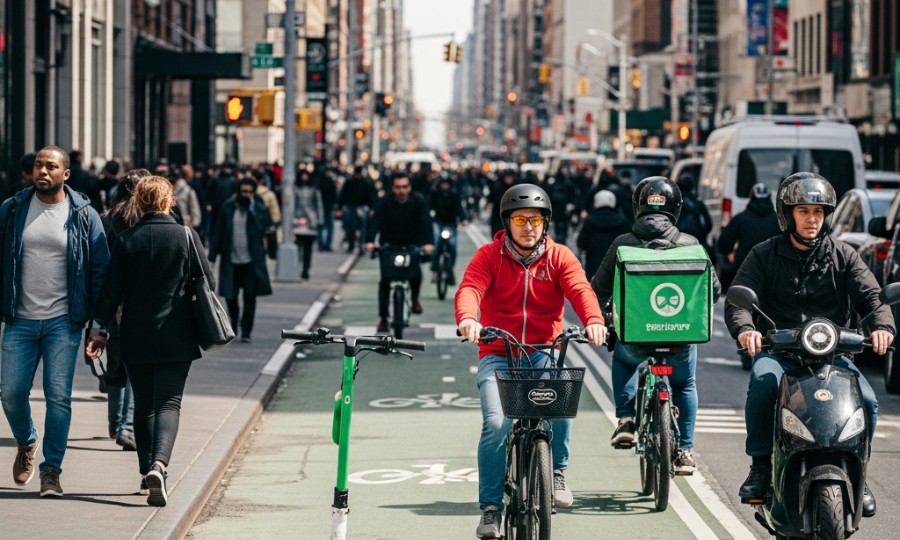
Ever felt a sudden whoosh past your ear while walking down a busy New York City sidewalk? Or maybe you’ve had to quickly step aside as an electric scooter zipped by, seemingly out of nowhere? You’re not alone. The proliferation of e-bikes and electric scooters has undeniably transformed how we navigate our beloved city, offering convenience and efficiency for many. But let’s be honest: for pedestrians, this new era of micro-mobility often feels like navigating a minefield.
We’re talking about more than just a minor inconvenience; we’re seeing a significant shift in pedestrian safety dynamics. While these vehicles offer fantastic eco-friendly commuting options and support the city’s vibrant delivery ecosystem, their rapid integration has brought new challenges to our already crowded sidewalks and streets. How do we balance the benefits of these new modes of transport with the critical need to protect those on foot? That’s what we’re going to explore.
The Rise of Micro-Mobility: A Double-Edged Sword for NYC Pedestrians
It’s hard to deny the utility of e-bikes and scooters. They’re quick, they’re often more sustainable than cars, and they’ve become indispensable for countless delivery workers keeping our city fed and moving. However, this convenience comes with a cost for pedestrians. According to recent NYC Department of Transportation (DOT) reports, accidents involving e-bikes and scooters have seen a noticeable increase, particularly those resulting in pedestrian injuries. It’s a concerning trend, isn’t it?
You might be thinking, “But aren’t they supposed to be on the street?” And you’d be right, for the most part. New York State law generally dictates that e-bikes and scooters should operate on streets and bike lanes, not sidewalks. The reality, however, often paints a different picture, especially in densely populated areas. We frequently see riders weaving through pedestrian traffic, sometimes at speeds that feel alarmingly high, leaving walkers feeling vulnerable and frustrated.
Understanding the Legal Landscape: What NYC Law Says
To truly grasp the situation, it helps to know the rules. In NYC, e-bikes and electric scooters are legal, but with specific regulations. For instance, most e-bikes (Class 1, 2, and 3) are permitted on bike lanes and streets, with speed limits ranging from 20 mph to 25 mph depending on the class. Electric scooters generally have a maximum speed of 15-20 mph. Critically, riding these devices on sidewalks is mostly prohibited, with fines for violations.
So, the laws are in place, but are they enough? Enforcement is a complex issue, and it’s something many pedestrians wish they saw more of. What’s clear is that simply having regulations isn’t always enough to prevent collisions when traffic and human behavior are involved. It’s a challenging environment, and we’re all trying to figure out the best way forward.
Common Scenarios & High-Risk Areas
Let’s paint a picture. Imagine you’re walking through the Lower East Side, heading to grab a bagel. Suddenly, an e-bike rider, likely a delivery person, cuts a sharp corner from the street onto the sidewalk to avoid traffic, nearly colliding with you. Or perhaps you’re strolling near Washington Square Park, enjoying the afternoon, when a group of tourists on rented scooters unexpectedly swerve onto the pedestrian path, unfamiliar with the city’s etiquette (or laws). These aren’t isolated incidents; they’re daily occurrences that contribute to a pervasive sense of unease.
High-traffic pedestrian zones – think Midtown, Times Square, major subway station entrances, or bustling avenues like Broadway and 5th Avenue – become particularly hazardous. It’s where the greatest number of people on foot intersect with the highest volume of micro-mobility devices. We know this feels overwhelming, especially when you’re just trying to get from point A to point B safely.
Why Accidents Happen: A Look at Contributing Factors
Several factors converge to create these risky situations. Speed, for one, is a major contributor. While 20 mph might not sound fast in a car, it’s incredibly quick when you’re on foot and sharing a confined space. Distracted riding (and walking, let’s be fair) also plays a huge role. Riders checking their phones for directions or orders, and pedestrians engrossed in their devices, both contribute to a lack of situational awareness. Then there’s the infrastructure gap: NYC’s bike lane network, while expanding, isn’t always comprehensive enough to accommodate the sheer volume of e-bikes and scooters, pushing some riders onto sidewalks. Finally, a lack of consistent rider education about pedestrian right-of-way and safe operating practices certainly doesn’t help.
Empowering Pedestrians: Your Role in Staying Safe
While we advocate for systemic changes, there are practical steps you can take to protect yourself. First and foremost, stay alert. Put away your phone, remove those noise-canceling headphones in busy areas, and keep your eyes up. Make eye contact with riders when possible; it’s a simple, human connection that can often prevent a misunderstanding. Walk defensively, anticipating potential movements from vehicles, just as you would with cars. It sounds simple, but in our fast-paced city, it’s easy to get complacent. Do we always do a good enough job looking out for ourselves?
Another valuable tip: try to be predictable in your movements. Avoid sudden changes in direction. If you see a rider approaching quickly, make a clear, decisive move to step aside if you can do so safely. In my experience, clear communication, even non-verbal, can make a significant difference in preventing close calls.
Advocating for Safer Streets: Collective Action for NYC
Personal vigilance is crucial, but true change requires collective action. We need better-designed infrastructure, including more dedicated, protected bike lanes that physically separate riders from pedestrians. Clearer signage and public awareness campaigns, perhaps like those run by the DOT, could educate both riders and walkers about shared responsibility and legal guidelines. Stricter, more consistent enforcement of sidewalk riding prohibitions would also send a strong message.
Supporting local advocacy groups that champion pedestrian safety can also amplify your voice. They’re often at the forefront of pushing for policy changes that make our streets safer for everyone. We believe that by working together, we can create a New York City where micro-mobility thrives without compromising the safety and peace of mind of its pedestrians. It won’t happen overnight, but it’s a goal worth striving for.
The era of e-bikes and scooters is here to stay, and while it brings many advantages, we can’t ignore its impact on pedestrian safety. By understanding the risks, knowing your rights, and actively participating in solutions, we can all contribute to a safer, more harmonious New York City for every resident and visitor. Let’s make sure our streets are truly safe for everyone.
This article was drafted with AI assistance. Please verify all claims and information for accuracy. The content is for informational purposes only and does not constitute professional advice.
Free Case Consultation
Injured in an accident? Speak directly with an experienced NYC personal injury attorney at
Rosenberg, Minc, Falkoff & Wolff.
Your consultation is free, confidential, and risk-free.
No obligation – No upfront fees – You don’t pay unless we win
Follow RMFW Law for legal insights and case results: