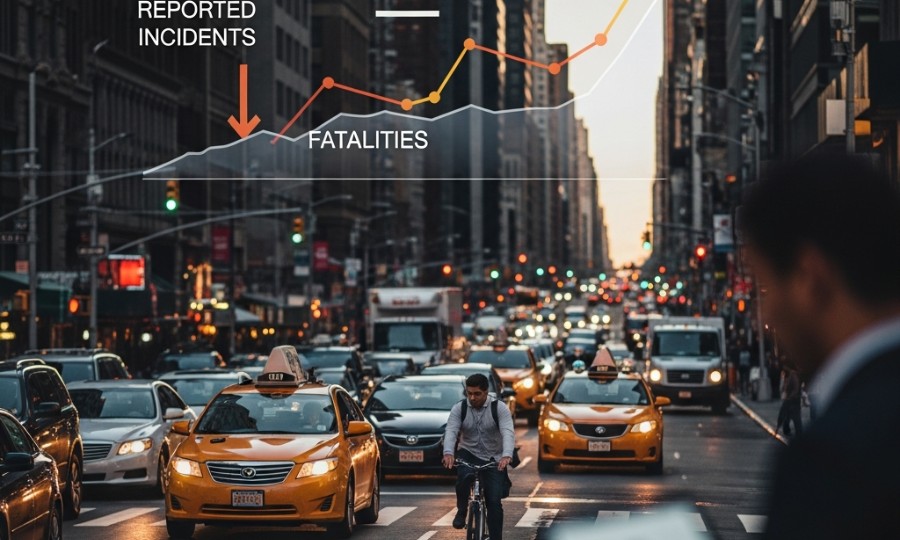
Ever scroll through Reddit and stumble upon a conversation that perfectly encapsulates a complex urban issue? Recently, a trending discussion caught our eye, highlighting a puzzling post-pandemic paradox here in New York City: a perceived decline in reported car collisions, yet seemingly consistent — and tragically high — fatality rates. Doesn’t that seem counterintuitive? It’s a question that sparks inquiries into everything from shifting reporting policies to the very real implications for your insurance and safety on our bustling streets.
We understand this topic can feel a bit overwhelming, especially when you’re trying to make sense of conflicting information. So, let’s unpack this conundrum together, looking at the data, the policies, and what this all means for you, the everyday New Yorker navigating our city’s intricate traffic landscape.
The NYC Traffic Paradox: Fewer Reports, Persistent Tragedy
The Reddit conversation, while anecdotal, points to a sentiment many New Yorkers might share: traffic
feels different. Perhaps there’s less bumper-to-bumper gridlock in certain areas, or maybe you’re noticing fewer minor fender-benders being handled by police on the spot. Here’s the thing: official data from sources like the NYPD and the NYC Department of Transportation (DOT) does show fluctuations. For example, during the height of the pandemic, traffic volumes certainly dropped, and with them, the raw number of collisions. However, what’s truly unsettling is the resilience of fatal crashes.
Despite the city’s ambitious Vision Zero initiative, which aims to eliminate traffic fatalities and serious injuries, the number of lives lost on NYC roads has remained stubbornly high in recent years. In fact, preliminary data from the National Highway Traffic Safety Administration (NHTSA) indicates that while overall traffic fatalities saw a slight decrease nationwide in 2022 after a pandemic-era surge, urban areas like NYC still face significant challenges. So, if fewer minor incidents are being reported, why aren’t we seeing a corresponding drop in the most tragic outcomes? It’s a critical distinction, as you can imagine.
Unpacking the Reporting Discrepancy: What’s Really Being Counted?
Part of this paradox likely lies in how collisions are reported. In New York City, NYPD does not respond to minor, non-injury property-damage crashes and directs drivers to self-report online for non-injury collisions. What about those smaller incidents – the minor scrapes, the parking lot bumps, the ‘love taps’ that don’t involve visible injury or substantial immediate damage?
In most cases, if an accident is minor and both parties exchange information without police intervention, it might never appear in official police collision statistics. This trend could have accelerated post-pandemic. Why? Perhaps drivers are more inclined to handle minor incidents directly with their insurance providers to avoid potential delays or higher premiums associated with a police report. Or, quite frankly, with reduced traffic during certain periods, drivers might have felt less pressure to involve law enforcement for minor incidents. This isn’t to say people are avoiding their responsibilities; rather, the process of documenting and reporting has perhaps become more streamlined or privatized through insurance channels, creating a gap in public data.
Consider this scenario: You’re in a busy Manhattan intersection, and someone backs into your bumper, causing a small dent. No one’s hurt, your car’s still perfectly drivable. You exchange insurance info, maybe snap a few photos, and go on your way. You’ve handled it professionally, but for official city statistics, that incident might as well not have happened. This widespread behavior could easily contribute to the perception and reality of fewer ‘reported’ collisions.
The Stubborn Reality of Fatalities: Beyond the Numbers
If minor incidents are flying under the radar, why aren’t fatalities following suit? The truth is, serious and fatal crashes often involve different dynamics. During the initial phases of the pandemic, when roads were emptier, some drivers unfortunately took advantage of the open lanes to speed. Higher speeds dramatically increase the severity of a collision. Also, New York City has seen a significant increase in vulnerable road users – pedestrians and cyclists – who are inherently more exposed and at greater risk in any collision, regardless of its ‘minor’ or ‘major’ status.
The type of vehicles on the road also plays a role. We’re seeing more large SUVs and trucks, which can inflict greater damage in a crash. Even a ‘minor’ collision involving a pedestrian and a larger vehicle can easily turn fatal. So, while the absolute number of crashes might fluctuate with traffic volume, the
characteristics of the crashes that result in fatalities haven’t necessarily changed in a way that would lead to a dramatic decrease. It’s a sobering thought, isn’t it? Our city’s commitment to Vision Zero is more critical than ever, focusing on infrastructure changes, enforcement, and education to protect everyone, especially those most vulnerable.
Your Insurance & The Data Gap: Navigating the Unknown
This discrepancy between reported collisions and consistent fatalities has direct implications for you, particularly concerning your vehicle insurance. Insurers rely heavily on accident data to assess risk, set premiums, and understand claim trends. If a significant number of minor collisions aren’t making it into official police reports, it creates a data gap. This doesn’t mean insurers are completely in the dark; they have their own claims data, of course. However, it can complicate the broader picture of risk assessment across the city.
You might be thinking a small ding isn’t worth the hassle of calling your insurance, let alone the police. But here’s why it’s crucial to report
all incidents to your insurer, even if you don’t call 911: delays in reporting can lead to complications. For instance, what if you discover an injury days later, or hidden damage becomes apparent? Without timely reporting, your claim could be denied or its processing significantly delayed. Your insurance company needs to be aware of any potential liability or damage as soon as possible to protect your interests.
Consider Jane, who had a minor parking lot scrape. She exchanged info and thought nothing of it. Weeks later, she started experiencing neck pain. When she tried to file a claim, her insurance company questioned the delay and the lack of immediate documentation, making the process far more challenging than it needed to be. Prompt reporting, even for seemingly insignificant events, creates a clear record and protects you down the line.
Empowering Your Safety & Claims: What You Can Do
So, what’s your role in all this? As New Yorkers, we can all contribute to safer roads and ensure we’re protected when the unexpected happens. First, drive defensively and be acutely aware of your surroundings, especially vulnerable road users. Second, if you’re involved in any collision, no matter how minor, prioritize safety first. Move to a safe location if possible. Check for injuries. Then, document everything: take photos of vehicle damage, the scene, and gather contact and insurance information from all parties involved. If there are injuries or significant damage, always call the police.
Finally, and this is key, always report the incident to your insurance provider promptly. Even if you don’t plan to file a claim immediately, creating a record protects you from potential future liabilities or unexpected medical issues. We know navigating the aftermath of an accident can feel incredibly stressful, but being prepared and informed is your best defense.
This post-pandemic paradox in NYC traffic data isn’t just an interesting Reddit thread; it’s a reflection of complex changes on our roads and in our reporting behaviors. By understanding these nuances, you’re better equipped to make informed decisions, stay safe, and navigate the intricacies of city driving with confidence.
This article was drafted with AI assistance. Please verify all claims and information for accuracy. The content is for informational purposes only and does not constitute professional advice.
Free Case Consultation
Injured in an accident? Speak directly with an experienced NYC personal injury attorney at
Rosenberg, Minc, Falkoff & Wolff. Your consultation is free, confidential, and risk-free.
No obligation • No upfront fees • You don’t pay unless we win