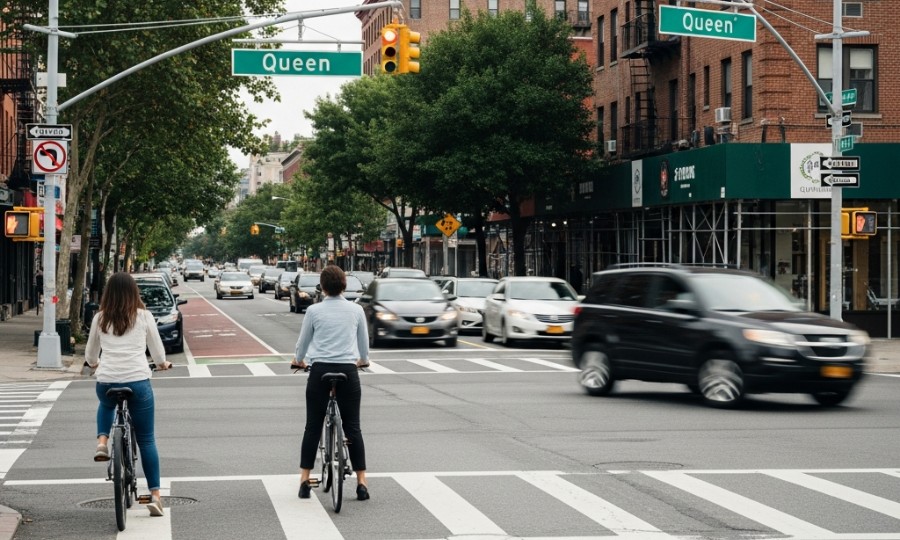
Do you ever feel a little uneasy crossing a busy street in Queens, or maybe cycling along a major thoroughfare? You’re not alone. Our borough, vibrant and bustling as it is, unfortunately, sees a disproportionate number of pedestrian and cyclist injuries and fatalities each year. It’s a sobering reality, and one that demands our attention, not just as residents, but as a community committed to safety and justice.
We all know Queens is a hub of activity, with its diverse neighborhoods, bustling commercial districts, and complex network of streets. This constant motion, while a hallmark of our community, also creates challenges for those on foot or bike. The truth is, vulnerable road users — pedestrians and cyclists — face significant risks, and understanding these risks, along with your legal protections, is absolutely crucial. You might be thinking, ‘What can I really do about it?’ Well, we’re going to explore just that.
Understanding Queens’ High-Risk Zones for Pedestrians and Cyclists
When we talk about pedestrian and cyclist safety in Queens, we can’t ignore the areas where incidents are most concentrated. The NYC Department of Transportation (DOT) and the Vision Zero initiative consistently highlight specific corridors and intersections as high-risk zones. These aren’t just abstract statistics; they represent real places where real people have been hurt. For instance, major arteries like Queens Boulevard (often called the ‘Boulevard of Death’ in previous decades, though significant safety improvements have been made), Northern Boulevard, and Woodhaven Boulevard continue to present challenges due to their width, traffic volume, and sometimes, complex intersections.
Why are these areas so dangerous? Often, it’s a combination of factors: speeding vehicles, distracted drivers (and pedestrians/cyclists, let’s be honest), inadequate lighting, poor street design, and a sheer lack of safe crossing or cycling infrastructure. For example, a wide, multi-lane road like Northern Boulevard can be particularly daunting for a pedestrian trying to cross, especially during peak hours. Similarly, cyclists often find themselves navigating a precarious dance between parked cars, moving traffic, and turning vehicles on streets not designed with their safety in mind. It’s a constant concern, and it’s something we’re always striving to improve.
The Impact of Vision Zero on Queens Safety
New York City’s Vision Zero initiative, launched in 2014, has been a game-changer in addressing traffic fatalities and severe injuries across all five boroughs, including Queens. Its core philosophy is simple yet profound: traffic deaths are preventable, not inevitable. This isn’t just a slogan; it’s a commitment backed by data-driven strategies and significant investment in infrastructure and enforcement.
In Queens, Vision Zero has led to tangible improvements. We’ve seen the implementation of leading pedestrian intervals (giving pedestrians a head start before vehicles get a green light), expanded protected bike lanes, redesigned intersections with clearer markings and traffic calming measures, and increased enforcement against dangerous driving behaviors like speeding and failing to yield. You’ve probably noticed some of these changes in your own neighborhood, haven’t you? While the work is ongoing, official reports from the NYC DOT consistently show a reduction in traffic fatalities citywide since Vision Zero’s inception. It’s proof that a concerted effort can make a real difference, though we still have a long way to go, particularly in specific Queens neighborhoods that remain hot spots for collisions.
Navigating Legal Protections for Vulnerable Road Users
If you or a loved one has been involved in a pedestrian or cycling accident in Queens, knowing your legal rights is paramount. It can feel incredibly overwhelming in the aftermath of such an event, especially when you’re dealing with injuries and medical bills (and let’s not forget the emotional toll). But you don’t have to face it alone.
In New York, several legal principles protect vulnerable road users. For instance, drivers generally have a duty to exercise reasonable care to avoid colliding with pedestrians and cyclists. New York’s Vehicle and Traffic Law also outlines specific responsibilities, such as yielding the right-of-way. If a driver fails in this duty and causes an accident, they may be found negligent, opening the door for victims to seek compensation for medical expenses, lost wages, pain and suffering, and other damages. This isn’t about assigning blame unfairly; it’s about ensuring accountability and helping victims recover.
What to Do After an Accident: Your Immediate Steps
So, an accident has happened. What’s next? Here’s the thing: your actions immediately following an incident can significantly impact any future legal claim. First and foremost, ensure your safety and seek medical attention, even if you feel fine initially. Adrenaline can mask pain, and some injuries aren’t immediately apparent. Secondly, if possible and safe to do so, document everything: take photos of the accident scene, vehicle damage, your injuries, and any relevant road conditions. Get contact information from witnesses and the driver involved. File a police report – it creates an official record of the incident. Finally, and this is crucial, consult with an attorney specializing in personal injury law, particularly one familiar with New York’s specific traffic laws and personal injury claims. They can guide you through the complexities of dealing with insurance companies and navigating the legal system.
Understanding ‘No-Fault’ and Your Rights
New York is a ‘no-fault’ state when it comes to car insurance. This means that, regardless of who caused the accident, your own car insurance (or the insurance of the vehicle that hit you, if you don’t own a car) will typically cover your initial medical expenses and lost wages up to a certain limit through ‘Personal Injury Protection’ (PIP) benefits. However, ‘no-fault’ doesn’t prevent you from pursuing a lawsuit against the at-fault driver if your injuries meet a certain ‘serious injury‘ threshold defined by New York law. This threshold includes things like fractures, significant disfigurement, or permanent limitation of a body function. It’s a complex area, and honestly, you’ll want expert guidance to determine if your injuries qualify and how to proceed.
The journey to recovery after a serious accident can be long and challenging. You might be worried about how you’ll pay your bills or get back to your normal life. It’s a completely understandable concern. That’s why having a professional and engaging legal team on your side can make all the difference. They can help you understand your rights, gather necessary evidence, negotiate with insurance companies, and if necessary, represent you in court to ensure you receive the full and fair compensation you deserve. We’re here to help you navigate these difficult waters, ensuring your voice is heard and your future is protected.
Pedestrian and cyclist safety in Queens isn’t just a policy discussion; it’s about the well-being of our neighbors, friends, and family. By understanding the risks, supporting initiatives like Vision Zero, and knowing your legal rights, we can all contribute to making our streets safer for everyone.
This article was drafted with AI assistance. Please verify all claims and information for accuracy. The content is for informational purposes only and does not constitute professional advice.
Free Case Consultation
Injured in an accident? Speak directly with an experienced NYC personal injury attorney at
Rosenberg, Minc, Falkoff & Wolff.
Your consultation is free, confidential, and risk-free.
No obligation – No upfront fees – You don’t pay unless we win
Follow RMFW Law for legal insights and case results: