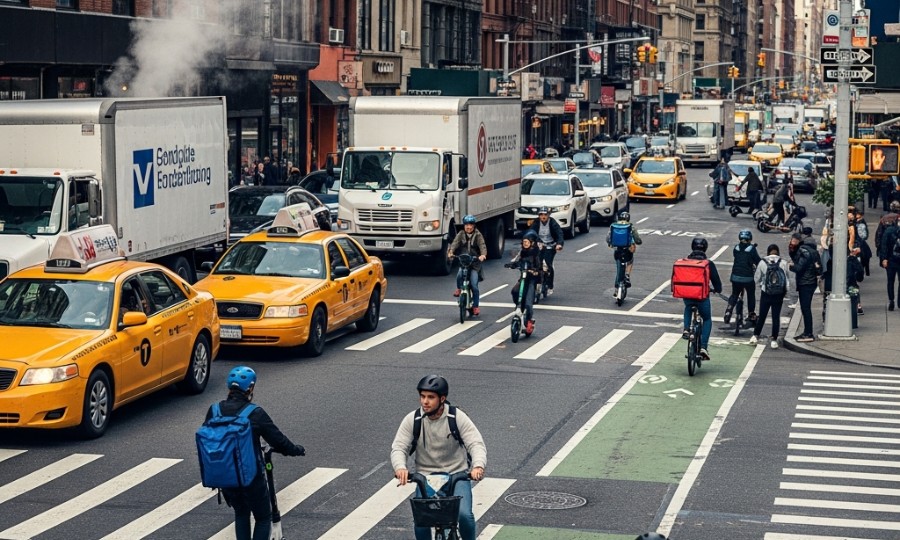
New York City’s streets have always been a vibrant, often chaotic, ballet of yellow cabs, delivery trucks, and hurried pedestrians. But lately, you’ve probably noticed a significant new cast of characters: the ever-present e-bikes and electric scooters. They’re zipping through traffic, gliding down bike lanes, and sometimes, unfortunately, appearing where you least expect them. This surge in micro-mobility options, while offering undeniable convenience, has undeniably ratcheted up the tension and, sadly, the accident rates across the five boroughs. It’s a complex puzzle, isn’t it? When a collision occurs between a pedestrian, a car, and one of these new electric vehicles, who’s truly at fault?
We’re not just talking about minor fender-benders; recent data from the New York City Police Department (NYPD) indicates a concerning rise in accidents involving e-bikes and scooters, with injuries affecting riders, drivers, and pedestrians alike. This isn’t just a matter of inconvenience; it’s a critical public safety issue that demands a closer look at liability, existing regulations, and what still needs to change. You’re likely wondering how current laws address these evolving challenges, and honestly, it’s a question many New Yorkers are asking too. Let’s delve into the intricate streetscape of NYC and try to untangle who’s to blame when the unexpected happens.
Navigating NYC’s New Reality: The Rise of E-Mobility
It wasn’t long ago that e-bikes and e-scooters occupied a legal gray area in New York. However, with the passage of state legislation in 2020, electric bikes and scooters were officially legalized, opening the floodgates for their widespread adoption. This legislative shift aimed to promote greener transportation options and support the burgeoning delivery economy, which, let’s be honest, we all rely on heavily. You can’t walk a block in Manhattan without seeing an army of delivery riders on e-bikes.
This legalization, while progressive, brought with it a host of new challenges. Suddenly, a relatively unregulated fleet of speedy two-wheelers was sharing space with traditional vehicles and pedestrians, many of whom weren’t accustomed to their silent approach or rapid acceleration. The New York City Department of Transportation (DOT) has been working to expand bike lane infrastructure, but the sheer volume and speed of these new vehicles often outpace the existing capacity. Think about it: a pedestrian stepping off a curb might be looking for a car or a traditional bicycle, not an e-bike traveling at 20 mph.
For instance, consider the common scenario of an e-bike rider weaving through stalled traffic to make a delivery, potentially utilizing a sidewalk for a short stretch (which is illegal, by the way). If they collide with a pedestrian, the immediate question is always, ‘Who should have seen whom?’ It’s a far cry from the days when the biggest concern was just avoiding a rogue taxi. This new dynamic requires a collective adjustment and a clearer understanding of everyone’s responsibilities on the road.
Understanding the Legal Landscape: Who’s Responsible?
When an accident involves an e-bike, scooter, car, or pedestrian, determining liability isn’t always straightforward. Generally speaking, New York follows a ‘comparative negligence’ standard. This means that if multiple parties contribute to an accident, their fault is assessed as a percentage, and any damages awarded are reduced by their degree of fault. So, if you’re found to be 20% at fault for an accident, your compensation would be reduced by 20%.
Here’s the thing: while e-bikes and scooters are now legal, they come with specific rules. For example, e-bikes are generally prohibited from operating on sidewalks (Class 1 and 2 e-bikes can go up to 20 mph, Class 3 up to 25 mph, but are restricted to certain streets and cannot be used by commercial delivery services). Scooters also have speed limits and are generally restricted to roadways or bike lanes. If a rider is operating outside these regulations – say, speeding excessively or riding against traffic – it significantly impacts their liability in a collision. Similarly, a driver failing to yield or a pedestrian jaywalking could also share responsibility.
Let’s take a specific example: an e-scooter rider, legally operating in a bike lane, is suddenly cut off by a car making an illegal right turn without signaling. In this instance, the car driver would likely bear significant, if not full, responsibility due to traffic law violations. Conversely, if that same e-scooter rider swerves onto the sidewalk and hits a pedestrian, the rider’s liability would be substantial. It’s a legal tightrope walk, and documenting every detail after an incident becomes critically important for all involved parties.
The Human Element: Shared Streets, Shared Responsibility
Beyond the legal statutes, there’s a profound human element to this evolving streetscape. We’re all trying to get somewhere, often quickly, and sometimes that urgency can lead to lapses in judgment. Drivers often express frustration with e-bikes and scooters darting unpredictably, while pedestrians feel increasingly vulnerable to fast-moving vehicles on what they perceive as their safe spaces. E-bike and scooter riders, in turn, often feel squeezed between aggressive drivers and distracted pedestrians.
This isn’t about pointing fingers universally; it’s about acknowledging the shared responsibility we all have to make our streets safer. As a pedestrian, are you truly looking both ways, and perhaps taking an extra second to scan for quieter, faster vehicles? As a driver, are you giving bike lanes the respect they deserve and checking your blind spots more diligently for smaller, faster-moving traffic? And as an e-bike or scooter rider, are you adhering to speed limits, signaling your intentions, and staying off sidewalks, even when it feels inconvenient?
I believe a significant part of the solution lies in a renewed commitment to basic road etiquette and defensive practices from everyone. For instance, a delivery rider, under pressure to meet quotas, might be tempted to bend the rules. But the potential cost of an accident – to themselves or others – far outweighs any time saved. We’re all part of this ecosystem, and our individual choices collectively shape the safety of our urban environment. Can we really expect significant change without personal accountability?
Calls for Clarity: The Push for Better Regulation
While existing laws provide a framework, many advocates and city officials recognize the need for clearer, more comprehensive regulations specific to e-mobility. There’s an ongoing dialogue about issues like mandatory registration for e-bikes and scooters, stricter enforcement of speed limits, and even the potential for dedicated e-bike lanes separate from traditional bike lanes in high-traffic areas. The NYC Council and the Mayor’s Office have both expressed commitment to addressing these safety concerns, often referencing proposals from groups like Transportation Alternatives.
You might be thinking that more regulations just mean more bureaucracy, but the truth is, a lack of clarity can be even more dangerous. For example, while helmets are recommended for adult e-bike riders, they are only legally required for those under 14 years old. Given the speeds these vehicles can achieve, should helmet laws be extended to all riders? This is just one of many questions being debated. Another common concern is the prevalence of unregistered or modified e-bikes that exceed legal speed limits, making them particularly hazardous.
The goal isn’t to stifle the convenience and environmental benefits of e-mobility, but rather to integrate it safely and harmoniously into the urban fabric. This will likely involve a multi-pronged approach: enhanced public awareness campaigns to educate all road users, increased enforcement by the NYPD, and continued investment in infrastructure that safely separates different modes of transportation. It’s a continuous process of adaptation, and frankly, we’re still in the early stages of figuring it all out.
Protecting Yourself on NYC Streets: Actionable Steps
Given the complexities, what can you do to protect yourself? First and foremost, whether you’re a pedestrian, driver, or rider, practice heightened situational awareness. Don’t assume others will follow the rules, and always anticipate the unexpected. If you’re walking, put down your phone and make eye contact. If you’re driving, be extra vigilant when turning and opening car doors (the dreaded ‘dooring’ incident is a real risk for cyclists and e-riders).
For e-bike and scooter riders, always wear a helmet, even if it’s not legally required for you. Invest in proper lighting and reflective gear, especially if you’re riding at night. Adhere to speed limits and, crucially, stay off sidewalks. If you’re involved in an accident, even a minor one, it’s vital to exchange information, document the scene with photos, and if injuries are involved, seek medical attention immediately and consider consulting with legal counsel. Your actions immediately after an incident can significantly impact any future claims.
Ultimately, navigating NYC’s evolving streetscape is a shared challenge. It requires vigilance, empathy, and a collective commitment to safety from everyone who uses our roads and sidewalks. We’re all in this together, aren’t we? By understanding the rules, practicing defensive habits, and advocating for sensible regulations, we can work towards a safer, more predictable New York for everyone.
Free Case Consultation
Injured in an accident? Contact Rosenberg, Minc, Falkoff & Wolff for a free and confidential case review with an experienced NYC personal injury attorney.