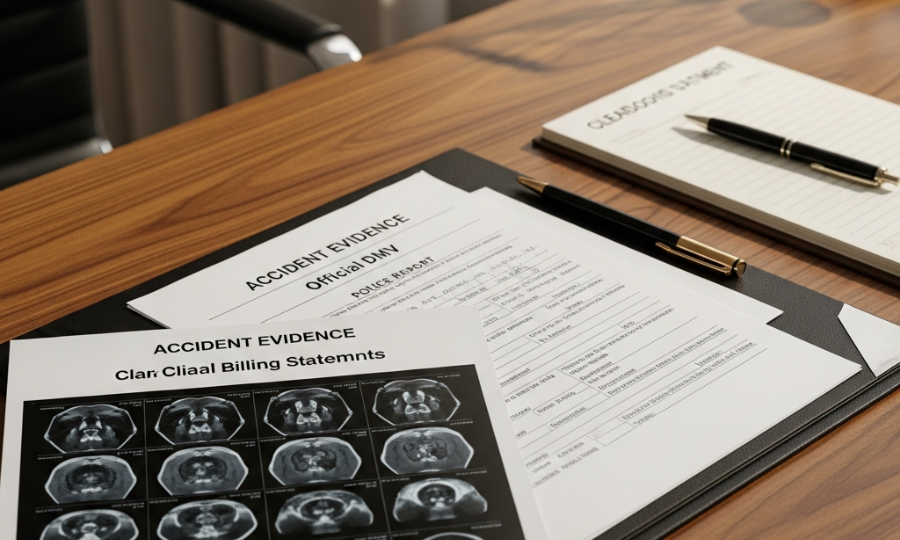
A sudden personal injury accident in New York City can derail your life in seconds. Whether you were struck by a reckless driver in Brooklyn, injured on a Manhattan construction site, or involved in a multi-vehicle crash in Queens, the days following an incident feel chaotic. Gathering the right documentation before sitting down for your initial legal consultation is one of the most effective ways to protect your rights and keep your claim moving forward smoothly.
Key Takeaways
- Under NY CPLR Section 214(5), standard injury suits must be filed within three years, but General Municipal Law Section 50-e requires a sworn Notice of Claim within 90 days for city entities.
- NY Insurance Law Section 5102(a) provides up to $50,000 in No-Fault PIP benefits, capping lost earnings reimbursement at $2,000 per month for up to three years.
- Bringing official DMV MV-104AN police reports, medical bills, wage statements, and scene photos to your initial legal review drastically speeds up your case evaluation.
When you meet with a legal team, clear documentary evidence allows your attorney to evaluate liability, assess total damages, and build a persuasive strategy immediately. Coming prepared transforms your initial consultation into a direct, focused strategy session.
Official Police Reports and Scene Documentation
Official law enforcement documentation forms the foundation of almost every personal injury action. Following a traffic collision in any of the five boroughs, responding officers document the incident on Form MV-104AN, as outlined in official New York DMV crash report manuals. This standardized record records vital facts, including officer observations, weather conditions, driver statements, and preliminary fault determinations.
Under New York Vehicle and Traffic Law Section 600, all motorists involved in a crash are legally required to stop and exchange names, addresses, driver’s license details, and insurance information. Bringing this exchanged information to your consultation helps your lawyer identify all potentially liable parties and insurance coverage limits right away.
In addition to official reports, photos and videos taken at the scene provide invaluable visual evidence. Try to compile the following items:
- Clear photos showing vehicle damage, road conditions, traffic signals, and weather factors
- Images of visible physical injuries, including cuts, bruising, or surgical dressings
- Photographs of damaged personal property, such as crushed smartphones or torn clothing
- Contact details for neutral eyewitnesses who saw the incident occur
Medical Records, Bills, and Treatment Logs
Establishing the full extent of your physical injuries requires thorough, organized medical records. Under New York Insurance Law Section 5102(a), basic economic loss coverage through No-Fault Personal Injury Protection (PIP) provides up to $50,000 per person for necessary medical care and related economic costs. Providing your attorney with complete medical documentation ensures every expense is properly calculated and submitted.
To establish the required legal threshold for non-economic damages, plaintiffs must demonstrate a serious injury under New York Insurance Law Section 5102(d), such as a fracture or significant disfigurement. On May 26, 2026, New York State enacted auto liability reforms that eliminated the traditional 90/180-day non-permanent impairment category from the statutory serious injury threshold. Consequently, presenting immediate objective medical evidence, such as diagnostic imaging and emergency room records, is more critical than ever.
Bring these health-related documents to your initial legal review:
- Emergency department discharge summaries and ambulance transport logs
- Diagnostic test results, including X-rays, MRI scans, and CT imaging reports
- Itemized hospital bills, physical therapy statements, and prescription receipts
- Written treatment plans from primary doctors and orthopedic specialists
- A daily personal pain journal tracking your pain levels, physical limitations, and missed daily activities
Employment Evidence and Proof of Lost Income
Severe injuries frequently keep accident victims away from work, leading to immediate financial strain. Proper documentation allows your attorney to pursue comprehensive reimbursement for lost earnings and reduced future earning capacity.
Under New York Insurance Law Section 5102(a), No-Fault PIP benefits cap monthly lost earnings reimbursement at $2,000 per month for up to three years. If your actual loss exceeds this statutory cap, your attorney can seek the remaining balance through a third-party personal injury lawsuit against the at-fault party.
To substantiate your lost wage claim, collect the following financial documents:
- Recent W-2 forms, 1099 tax returns, or federal income tax filings
- Pay stubs showing pre-accident wage earnings and lost work hours
- A formal letter from your employer’s human resources department confirming missed shifts and salary rates
- Doctor’s notes explicitly authorizing your time off work for medical recovery
Critical Legal Deadlines for New York Injury Claims
Acting quickly to collect your documents is essential because New York law enforces strict statutory deadlines on personal injury actions. Missing a filing window can permanently extinguish your right to seek financial recovery.
Under New York Civil Practice Law and Rules Section 214(5), standard personal injury lawsuits based on general negligence must be filed within three years of the accident date. However, medical malpractice actions operate under a shorter timeline; under Civil Practice Law and Rules Section 214-a, medical malpractice claims must be filed within two years and six months of the negligent act or the end of continuous treatment.
The timeline is even shorter if your injury involves a municipal entity, such as a New York City Transit Authority bus or a roadway maintained by the City of New York. Under New York General Municipal Law Section 50-e, a formal sworn Notice of Claim must be served on the municipality within 90 days of the incident. Bringing your documents to a lawyer immediately ensures these strict municipal filing limits are met.
How Organized Evidence Accelerates Your Case
Arriving at your legal consultation with organized documents allows your legal team to start investigating right away. Instead of spending weeks requesting old medical records or searching for police reports, your attorney can immediately file administrative notices, preserve witness testimony, and negotiate directly with insurance adjusters.
Gathering your paperwork ahead of time protects your legal rights, helps reduce personal stress, and ensures your legal team can fight effectively for every dollar of compensation you deserve.
Sources
- New York State Senate, Civil Practice Law & Rules Section 214 – Actions to be commenced within three years
- New York State Department of Motor Vehicles, Police Crash Report Submission Instructions Manual (MV-104A)
This article was drafted with AI assistance. Please verify all claims and information for accuracy. The content is for informational purposes only and does not constitute professional advice.
Free Case Consultation
Injured in an accident? Speak directly with an experienced NYC personal injury attorney at
Rosenberg, Minc, Falkoff & Wolff.
Your consultation is free, confidential, and risk-free.
No obligation – No upfront fees – You don’t pay unless we win
Follow RMFW Law for legal insights and case results: